Leatherjackets in Your Lawn: How to Spot Them, When to Treat Them and What Works
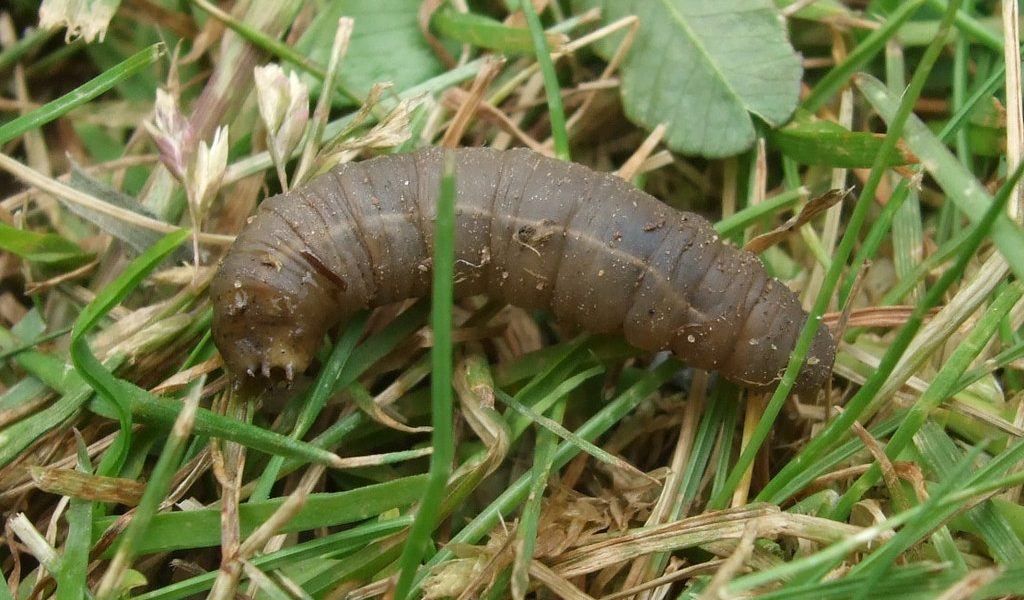
If birds have started tearing at your lawn this autumn, or you have lifted a thin, yellow patch of turf and it came away like a loose carpet, you very probably have leatherjackets. They are the grub of the crane fly, the daddy longlegs that fills the air on warm evenings in late August and September, and in a mild, wet part of the country like ours they are the one lawn pest that does real damage every year. This article is how I deal with them, on a club green and on a garden lawn, and the one thing I want you to take from it is that the timing matters far more than the product. Treat them in the autumn, while they are small, and almost anything works. Wait until you can see the damage in spring and almost nothing does.
I am Duncan Gray. I spent my working life in greenkeeping, latterly in charge of nine bowling greens for Kyle and Carrick, including Ayr Northfield for the World Championships, and I have been fighting leatherjackets on fine turf in the west of Scotland for more than forty years.
Some of the links below go to our own shop or to Amazon. If you buy through them we may earn a small commission, at no extra cost to you. I only point you at products I use myself.
Jump to a section:
- What a leatherjacket is, and why the weather decides how many you get
- How to tell leatherjackets from every other yellow patch
- The overnight test: soak it and cover it
- Why the autumn is the only window that matters
- Nematodes: the treatment for a garden lawn
- Bringing them up and brushing them off
- Acelepryn: the insecticide for clubs and contractors
- Repairing the damage
- Keeping the numbers down for good
- What goes wrong
- Bowling greens and sports turf: the short version
What a leatherjacket is, and why the weather decides how many you get
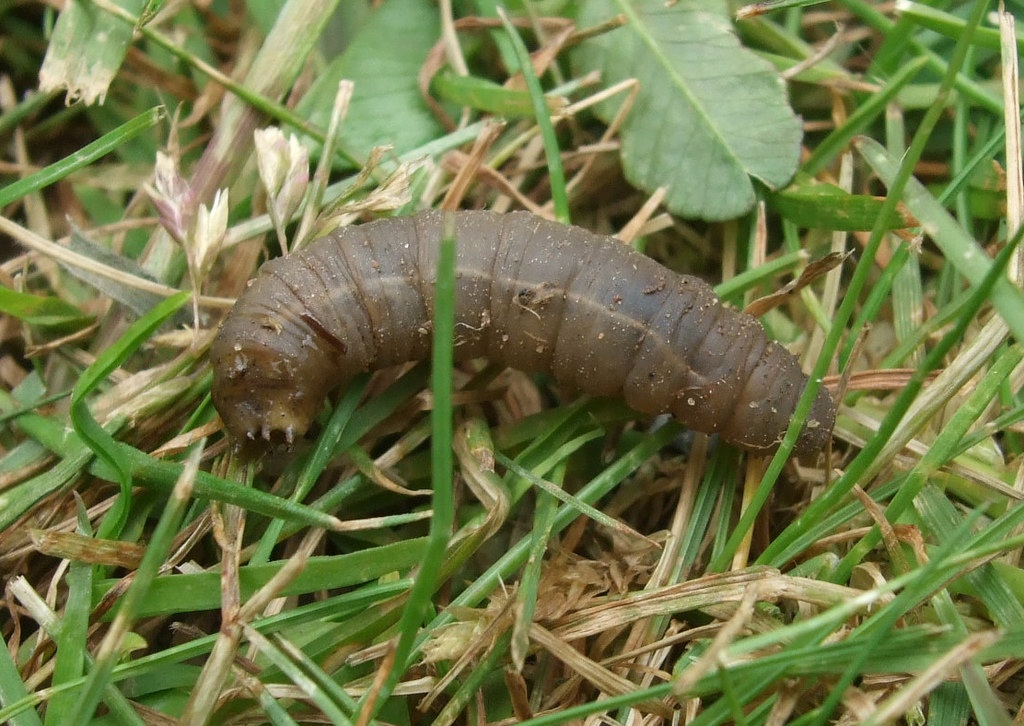
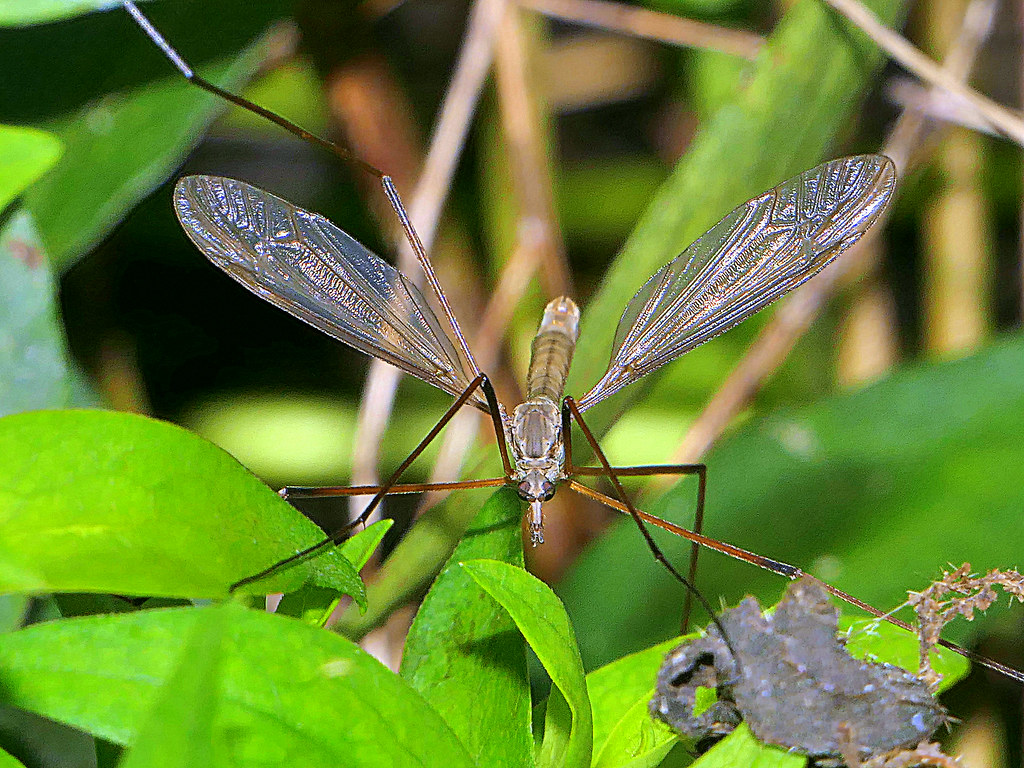
A leatherjacket is the larva of the crane fly. There are a great many kinds of crane fly in Britain and most of them do no harm at all, living in ditches and leaf litter and eating rotting matter. The one that matters to anyone with grass is the common European crane fly, Tipula paludosa, the big grey-brown daddy longlegs of late summer, and its grub is a tough-skinned, grey-brown, legless thing with no obvious head, which is where the name comes from. Small as a grain of rice when it hatches, as big as your little finger by the following spring.
The life cycle is the whole key to controlling them, so it is worth knowing. The adults emerge from the turf from late August through September, and in a late year into October. They live a week or so, they do not feed, and they do no damage themselves; all they do is mate and lay their eggs, straight back into the turf, a few hundred from each female. The eggs hatch within a couple of weeks and the young grubs start feeding at once, on the roots and on the base of the grass plants, just below the surface. They feed on through the autumn and, in a mild winter, right through the winter as well, growing all the time, and as they get bigger they come up at night and eat the crowns and the leaves. By spring they are big, and they are at their most destructive. In early summer they stop feeding, pupate in the soil, and in late summer the next lot of crane flies climb out, often leaving the empty brown pupal case sticking up out of the lawn. One generation a year.
Two things about the weather follow from that, and they explain why some years are so much worse than others:
- A wet autumn means a bad year. The eggs and the young grubs need damp soil. A dry September kills a great many eggs before they hatch, so a sky full of daddy longlegs does not always mean a lawn full of leatherjackets. A wet one does.
- A hard winter helps you; a mild one does not. Real frost, the sort that gets into the ground for a week or two, kills the small grubs and stops the survivors growing. A mild, wet winter, which is what we mostly get now in the west of Scotland, lets them feed all winter long, and by February they are already big enough to do visible damage.
So the pest is at its worst right through the winter, and getting worse as spring comes and the grubs grow. That is the fact that decides when you treat.
How to tell leatherjackets from every other yellow patch
A yellowing lawn in winter can be several things: compaction and waterlogging, a hungry lawn, fusarium, or leatherjackets, or a combination. These are the signs that point at the grubs:
- Birds working the lawn. This is the one most people notice first, and it is the surest tell. Starlings in a gang, rooks, crows, magpies, and in the country badgers and foxes, all tearing at the turf and leaving small round holes where a beak has gone in, or whole flaps of turf turned over. They are not damaging your lawn for fun; they are eating grubs. By the time the birds arrive the leatherjackets are usually big, which means it is late in the day to treat.
- Patches that go yellow-brown and thin from late winter on, often starting as a few irregular patches and spreading outwards. The grass is being eaten from below, so it looks hungry and dry whatever the weather.
- Turf that lifts. Take hold of a tuft in the patch and pull. Healthy grass holds. Grass with its roots eaten away comes up like a loose carpet, with grey-brown grubs in the soil and thatch underneath. Lift a spade-sized square at the edge of a patch, where they are still feeding, and look; one or two grubs is nothing to worry about, a dozen or more in a square that size is a problem.
- Collapsed seedlings and plants eaten off at soil level in beds next to the lawn. The same grub, having wandered.
If you see the patches but no birds and no grubs, look at the other winter problems before you spend money on a treatment.
The overnight test: soak it and cover it
If you are not sure, there is a test that costs nothing, and it is the same thing I use on a green to clear a bad patch by hand. Pick an evening when the ground is not frozen. Water the suspect area heavily, properly soaked, and cover it with something that keeps the light out: black polythene, a tarpaulin, wet sacking, a few old compost bags weighed down with stones. Leave it overnight. In the morning, lift the cover. The grubs cannot breathe in sodden ground and come up to the surface, and if leatherjackets are your problem you will find them lying on top of the grass under the sheet, sometimes dozens of them. Brush them up and get rid of them, or leave them for the birds, which by now have been doing the same job for you less tidily.
If you find nothing, it is not leatherjackets, and the money you were about to spend can go on aeration or feed instead.
Why the autumn is the only window that matters
Every treatment there is, biological or chemical, works on small grubs and struggles with big ones. A newly hatched leatherjacket in September is soft, it is feeding right at the surface, and the soil is still warm. The same grub in March is three centimetres long, leathery, deeper in the ground, and the soil is cold. That is why the window is the autumn, and why so many people are disappointed: they treat in spring, because spring is when they see the damage.
The windows, for the UK:
- Nematodes: September to early October, as soon as the daddy longlegs have been about for a couple of weeks and while the soil is still above about twelve degrees. In Scotland that means the first half of the window, not the second; by late October the soil is usually too cold here and the nematodes will not work.
- Acelepryn: late October to early November, the prime time in the UK, by a certificated contractor (more below). In the southern hemisphere it is reversed: March or April.
- The soak-and-cover method: any mild spell, autumn or spring, but it works best in the autumn while the grubs are near the surface.
By December it is too late to do anything useful except repair and plan. If you missed the window, do not throw money at the lawn in January; note where the damage is, deal with it in spring, and put the date in the diary for next September.
Nematodes: the treatment for a garden lawn
For a garden lawn, nematodes are the treatment, and they have moved on a great deal since I first wrote about them, when they were an expensive experiment. The one sold for leatherjackets is Steinernema feltiae, a microscopic worm that lives in the soil naturally, sold as Nemasys Leatherjacket Killer among others. You buy it by post, in a pack sized by the area of lawn, mix it in a watering can or a hose-end sprayer, and water it on. The nematodes find the grubs, get inside them, and kill them with a bacterium within a few days. They do nothing to you, the dog, the birds or the grass.
They are living things, though, and they only work if you treat them as such. The rules:
- Soil temperature above twelve degrees. This is the one that catches people out. Put them on in a cold spell, or too late in the autumn, and they sit there and die. If you are not sure, a cheap soil thermometer pushed in to a couple of inches in the afternoon tells you.
- Moist soil, before and after. Water the lawn before you apply them if it is dry, apply them in the evening or on a dull day so they are not dried out by the sun, and keep the lawn damp for two weeks afterwards. Nematodes travel through films of water in the soil; dry ground stops them dead.
- Use them the day they arrive, or keep them in the fridge for a few days, well inside the use-by date on the pack. Order them when the soil is warm and you are ready to apply, not in advance.
- Treat round the edges of the patches as well as the patches. The grubs spread outwards from the hot spots, and the edge is where the small ones are feeding.
- Be sure first. They are not cheap, so do the overnight test before you spend the money.
If you have missed the autumn, a spring application in April when the soil warms up again is a poor second: the grubs are big and the suppliers themselves tell you to double the dose. It is better than nothing on a lawn that is being destroyed, but go into it knowing that.
Bringing them up and brushing them off
The overnight test is also a treatment, and on a small lawn or a single bad patch it is often all you need. Done well, it clears most of the grubs in one go:
- Spike or fork the area first so the water gets in.
- Soak it in the evening. On a green I put a heavy dose of wetting agent in the water, which brings them up faster; on a garden lawn a good squirt of washing-up liquid in the can does the same job.
- Cover with a tarpaulin or black polythene and leave it overnight.
- In the morning, brush or rake up the grubs on the surface and dispose of them. Repeat a few nights later if you found a lot.
Do it in a mild spell. It will not work with frost in the ground, and it is much more effective in the autumn, when the grubs are feeding near the surface, than in the winter.
Acelepryn: the insecticide for clubs and contractors
For a long time there was no approved insecticide for leatherjackets in turf at all, which caused the managed turf industry real grief. That has changed. Acelepryn (the active ingredient is chlorantraniliprole) now has full approval in the UK for leatherjackets and chafer grubs on sports turf, golf courses, bowling greens and, applied professionally, on lawns. It is the one insecticide I would use on a green, and this is how it is used:
- It is a professional product. You cannot buy it over the counter and you cannot apply it yourself. It needs a certificated sprayer operator, which for a club or a householder means getting a contractor in. A lawn care company with the certificate can treat a garden lawn with it.
- Timing is late October to early November in the UK, so that it is in the soil while the grubs are small. One application a year is the maximum.
- Spike the ground beforehand so the application gets down into the turf where the grubs are, and water it in afterwards. On a dry, water-repellent surface a wetting agent first helps.
- It is very expensive, and it keeps. A litre is somewhere around nine hundred pounds at the time of writing, but a litre will do up to eight yearly applications on a full-size bowling green and it lasts for years in the shed. For a club that is plagued with leatherjackets it is money well spent; for most clubs the sensible thing is to share a bottle between two or three greens, or let the contractor supply it and charge per application.
For a householder with one ordinary lawn, Acelepryn is rarely the answer; nematodes at the right time and a healthier lawn will do it. For a club, a school field or a lawn care business, it is the tool.
Repairing the damage
Once the grubs are dealt with, the lawn has to be put back, and the order matters: get the leatherjackets under control first, then seed. New seedlings have soft roots and they are exactly what a hungry grub wants, so seed sown into an untreated patch simply feeds them.
In the spring, when the grass is growing again, rake the dead patches out hard, prick them over with a fork, top dress with a little sandy soil, sow a seed to match the lawn at about twenty-five grams per square metre, and keep it damp until it is up. Repair the bird damage the same way: press the flaps of turf back down, dress and seed any holes. Then feed. A lawn that has been eaten from below all winter is hungry, and a slow-release spring feed gets the roots growing again faster than anything else. On a green I would put seaweed meal on at the same time, and it does a garden lawn no harm either.
Small areas of bird damage over the winter are worth patching as you go rather than leaving holes until spring. Germination is much reduced in the cold but it still happens in a mild spell, anywhere in the UK.
Keeping the numbers down for good
You cannot stop the crane flies laying; there are too many of them and they fly in from the next field. What you can do is make your lawn a poor place for the eggs and the grubs to survive, and that comes down to the same things that make a good lawn anyway:
- Drainage and aeration. Leatherjackets thrive in wet, compacted, thatchy turf, because the eggs and young grubs need damp ground. A lawn that is spiked or hollow tined every autumn and does not lie wet is a far less comfortable home for them.
- Scarify the thatch out. The grubs live in the layer between the soil and the green growth. Less thatch, fewer grubs, and treatments get through to the ones that are there.
- Keep it cut. Long, soft grass going into the winter holds moisture at the surface and shelters them. Keep mowing, at a sensible winter height, as long as the grass is growing.
- Feed for roots, not for leaf. A sward with a deep, strong root system withstands a moderate population without you ever noticing it. An autumn feed low in nitrogen and high in potash, with iron and seaweed, is what I use on a green and it is right for a lawn as well: see the best lawn fertilisers for autumn and winter.
- Let the birds in. A few starlings on the lawn in September are doing your treatment for you. It is the gangs of them in February, on a lawn that was never treated, that are the problem.
- Do not spray the adults. People ask. There are far too many to make any difference, they are gone in days, and anything that kills a crane fly kills every useful insect on the lawn as well.
And if you had them badly this year, treat next September regardless of what you see. A lawn that has had a heavy infestation is very likely to get another, because the flies lay where they emerged.
What goes wrong
In my experience it is nearly always one of these:
- Treating in spring. The damage shows in March, the nematodes go on in March, and nothing much happens, because the grubs are big and the soil is cold. Then the verdict is that nematodes do not work. They work; they were put on five months late.
- Nematodes on cold or dry ground. Applied on a bright, dry afternoon in a cold snap, with no watering before or after, they are dead within hours. Warm, damp, dull, and keep it damp.
- Buying them too early. They arrive, the weather turns, they sit in the shed for a fortnight. Order when you are ready.
- Seeding into an untreated patch. The seed comes up, the seedlings vanish, and the birds get the blame.
- Waiting for the birds. If the lawn had them this year, the birds will be back next February. The treatment goes on in September whether you can see a grub or not.
Bowling greens and sports turf: the short version
On a green the programme is the one above with the dates fixed. Nematodes early in the autumn, September into the first days of October, watered on while the soil is above twelve degrees and kept moist; or Acelepryn by a certificated contractor in late October to early November, with the green spiked beforehand so it gets in. October is the last month you can do anything about them, and I cover it in the October routine. By December it is too late: note the damage, repair it with dressing and seed as part of the winter programme, and plan for next autumn. The best defence is still a healthy sward with a good root structure, which is what the whole of the definitive guide to maintaining a bowling green is about. A green on a proper aeration, scarifying and feeding programme will carry a moderate population without the bowlers ever knowing.
Your leatherjacket checklist
- Birds tearing at the turf, yellow patches that lift like a carpet: suspect leatherjackets.
- Soak and cover overnight to be sure, and to clear a small patch by hand.
- Garden lawn: nematodes in September to early October, soil above twelve degrees, damp before and after, used the day they arrive.
- Club, field or contractor: Acelepryn late October to early November, spiked in, certificated operator only, one application a year.
- Missed the window: repair in spring, treat next September regardless.
- Treat first, seed second. Never the other way round.
- Aerate, scarify, keep it cut and feed for roots, every year. That is what keeps the numbers down.
If you are in Dumfries and Galloway and would rather someone looked at the lawn with you, the first visit is free: Dumfries lawn care. Anywhere else, send me some photos and I will tell you what you are looking at and what to do about it, month by month, through the online lawn care service. Leatherjackets, fusarium, worms, moss and the rest are also covered in my free lawn weeds, pests and diseases eBook.
All the best,
Duncan.