
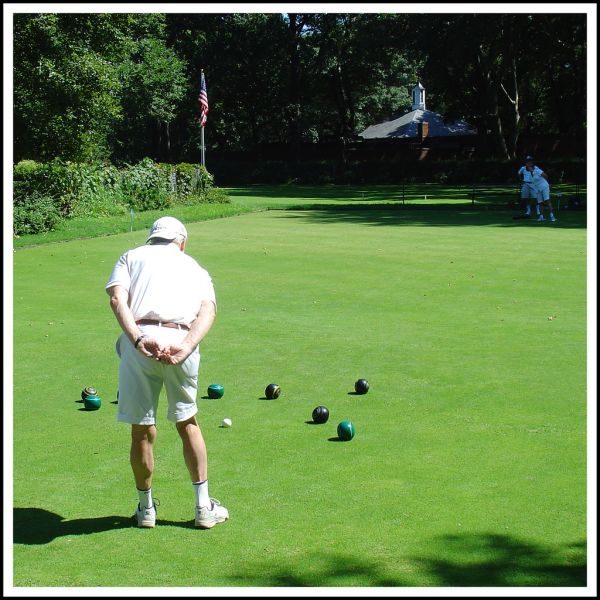
Autumn Bowling Green Maintenance and Renovation
This is the time of year that bowling clubs are winding down for the end of the playing season, but it is also when good planning and execution of the Autumn renovation programme will ensure that the condition of your bowling green will be first class for the start of the following season’s play.
I am Duncan Gray. I spent my working life in greenkeeping, including preparing the greens at Ayr Northfield for the World Bowls Championships, and the programme below is the one I have used on greens every autumn since. It is not complicated, but the order matters, and so does starting promptly.
Some of the links below go to our own shop or to Amazon. If you buy through them we may earn a small commission, at no extra cost to you. I only point you at products I would be happy to use on a green myself.
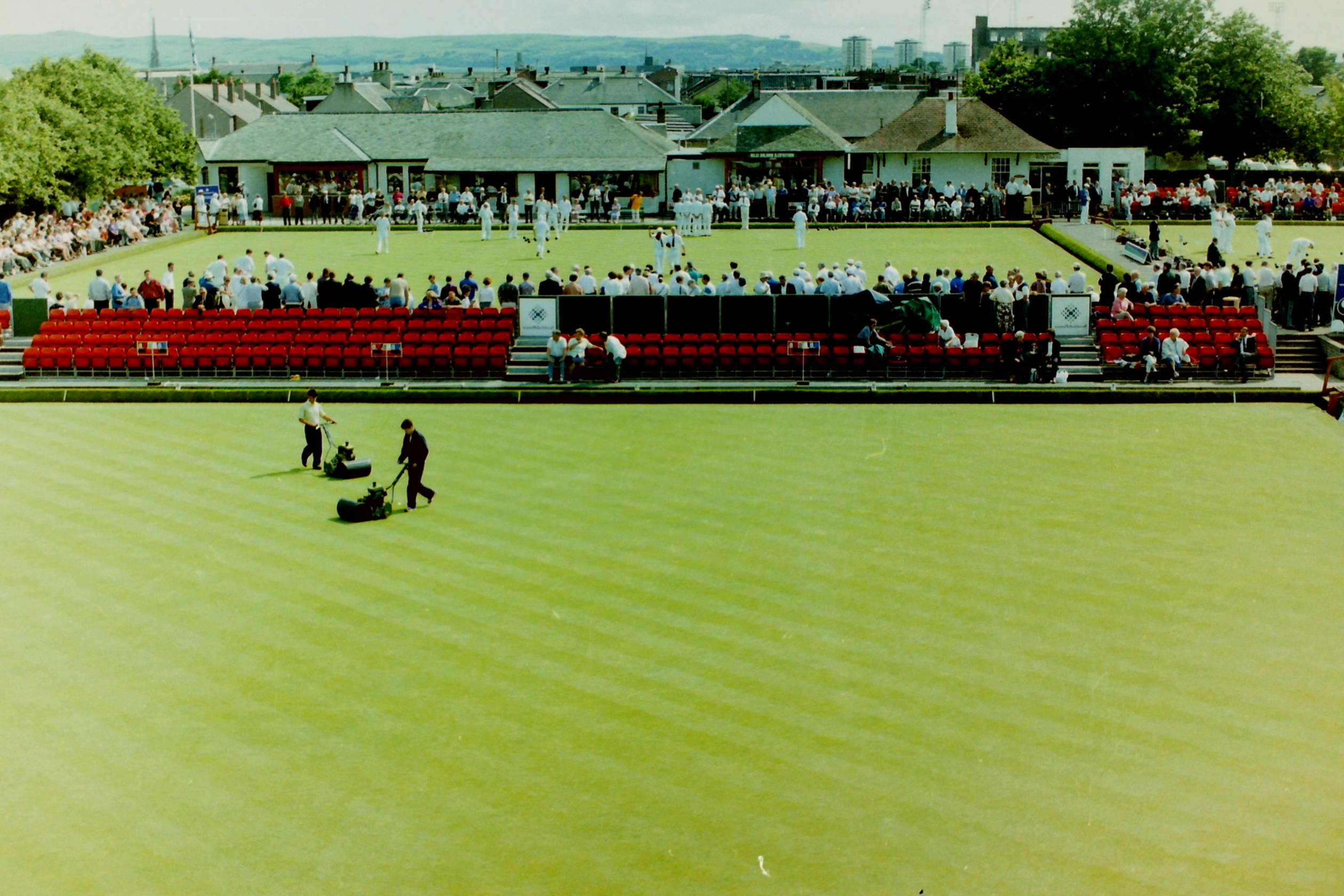
Bowls clubs have a great advantage over most sports turf maintenance operations as bowling greens close for the Winter, which makes the Autumn renovation programme so much easier, and if done properly, much more successful.
Jump to a section:
- When to start, and the first job: raising the height of cut
- Aeration: why I slit rather than hollow core
- Scarifying: how hard to go
- Overseeding and soil conditioner: seed, seaweed meal and the autumn feed
- Top dressing: the sand, the rate and the finish
- After the renovation: the green is not finished for the year
When to Start, and the First Job
The renovation should begin immediately the club closes the green, not a few weeks later when the committee has met. Many clubs close in mid-September, many others at the end of September or even the first week of October; whichever it is, the quicker the work is done, the better the recovery. The latest I would start, anywhere in the UK, is the middle of October. Everything that follows relies on the grass having enough growing time left to recover and fill in before the hard frosts arrive. Leave it until November and the seed will sit there doing nothing, the scarified sward will not knit back together, and the green goes into Winter thin and open. If the club has two greens, close one a fortnight earlier and start on that.
A wee bit of forward planning makes it a great deal easier. Have everything on site before closing day: the top dressing, the seed if you are overseeding, and the seaweed, all delivered by the middle of September, and the machinery booked. If you are hiring a verti-drain, book it several months ahead or you will not get it when you want it. If you need a hand fitting the work into the year, my month by month bowling green maintenance calendar lays out where the renovation sits against everything else.
The first step a bowls club should take as soon as the bowling green closes for play is to increase the height of cut to between six and 8mm (one quarter inch or just above) for the duration of the Autumn and Winter mowing. Six is for a firm green with little thatch. A soft old soil green that lies wet needs eight, because the mower sinks in and cuts lower than its bench setting. The extra leaf protects the crowns from frost and wear, and gives the plant more to work with while it recovers from the operations below. Mowing does not stop altogether over the Winter, but it drops to a light topping whenever there is growth to take off.
Bowling Green Aeration
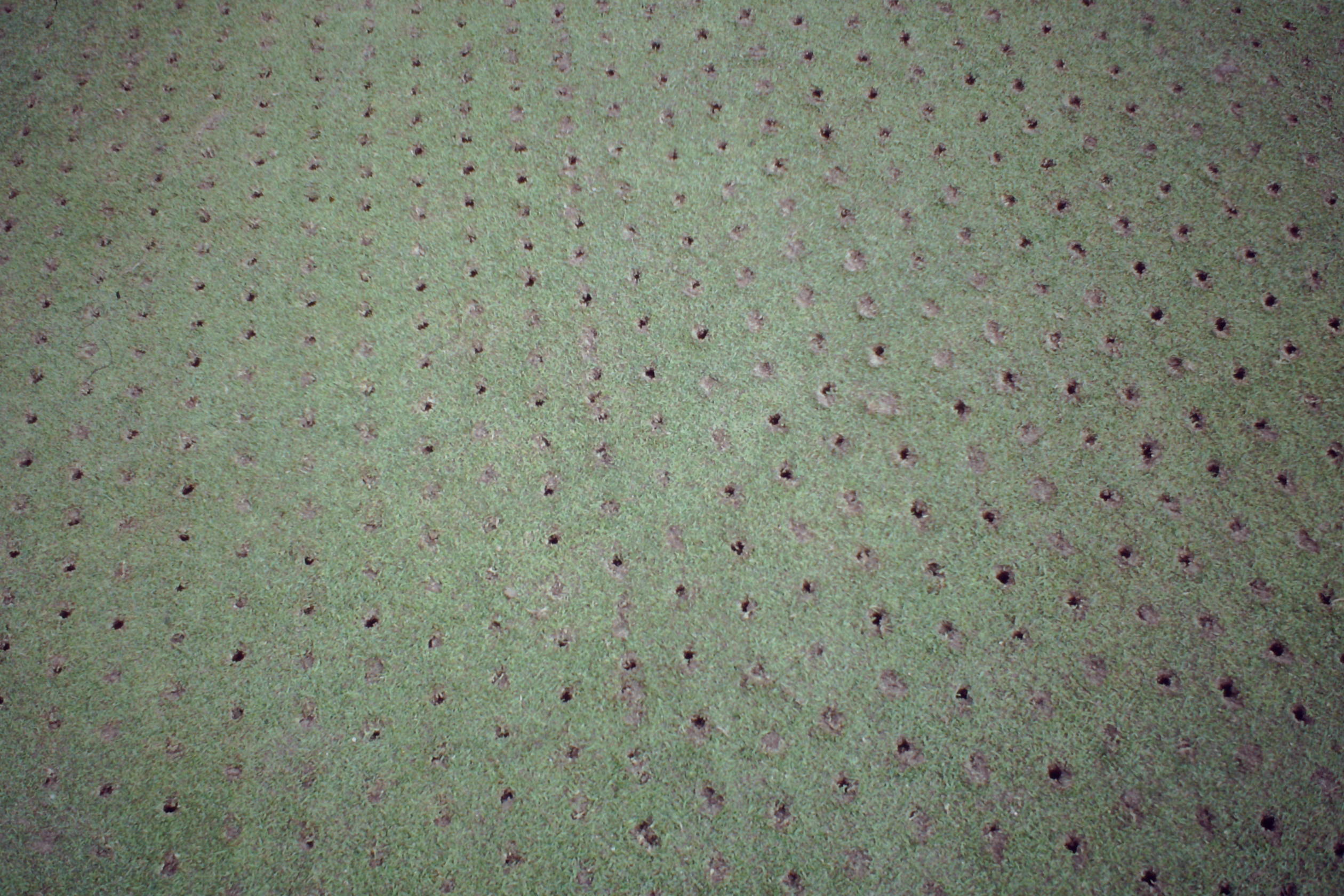
The first part of the renovation should be to aerate the green, particularly the heads. My personal preference is to slit tine rather than solid tine or hollow coring as I have experienced much more success with this method. I certainly would not recommend hollow coring unless the green is in very poor condition as it can encourage annual meadow grass invasion and an unstable surface. Always slit in the same direction as it is more effective and also avoids splitting the turf into sections which can pull out easily. The most worn areas on the heads should also be hand forked to further relieve any compaction.
Slitting, coring and verti-draining: which one, and when
Slitting does the job on the great majority of greens, and it is the operation I carry on with right through the Winter, deep slitting roughly once a month from October to March with chisel tines in between. Hollow coring and verti-draining have their place, but only as part of this Autumn programme and only where there is a real reason: a serious thatch problem, or a heavy soil that needs modifying to drain. Both leave the surface disturbed and both need topdressing to follow, so they are not something to do on a whim. If a verti-drain is recommended, remember it is a tractor mounted machine and you need to be sure it can get through the gate before you book it.
I go into the different aeration methods in more detail in the aeration section of my definitive guide, and there is a plain-English explanation of what each machine actually does in aeration explained. If the green has been sitting wet all season, read managing wet weather problems in turf before you decide how deep to go.
Scarifying Your Bowling Green
Scarifying is the next operation, the depth and severity being determined by how much thatch is present. If thatch is a problem then it may well be worth scarifying in two directions to remove as much as possible. I am assuming here, of course, that these operations are carried out as soon as the season is finished as there will then be enough growing time to fill in the sward before any hard frosts can damage the grass crowns.
How to judge the thatch
Cut a small plug out of a quiet corner of the green with a knife and look at the layer of brown, spongy material between the green leaf and the soil. Under a centimetre and a light scarify in one direction is plenty. Much more than that and it wants two passes, the second at right angles to the first, and you should expect the green to look a mess for a fortnight afterwards. That is normal. A thatch removal reel is severe on the sward, which is exactly why this is the time of year to use it: there is a whole Winter and Spring for the green to recover before anyone plays on it. In season, the lighter verti-cutting and grooming described in the scarifying section of the definitive guide are what keep the thatch from building up in the first place.
Clear the debris off the green as you go. Leaving it lying blocks the light and holds moisture against the sward, which is an open invitation to fusarium at this time of year.
Green Overseeding and Applying Soil Conditioner
The next step is to overseed any badly worn areas on the heads with a good quality bowling green seed mix. It is worth paying a little extra to ensure you get the best seed as, for the quantity involved, it will not cost much, but will be a lot better for your bowls club in the long term. I use, and we supply, a Premier bowling green seed mix of fine fescues and bents, with no ryegrass in it. Ryegrass has no place on a bowling green: it is too coarse, it will not tolerate the height of cut, and once it is in it is very hard to get out again.
Seed straight after scarifying, while the surface is open, and lightly rake it in so it is in contact with the soil rather than sitting on top. On the heads, where the wear is worst, it is worth working the seed into the fork holes as well.
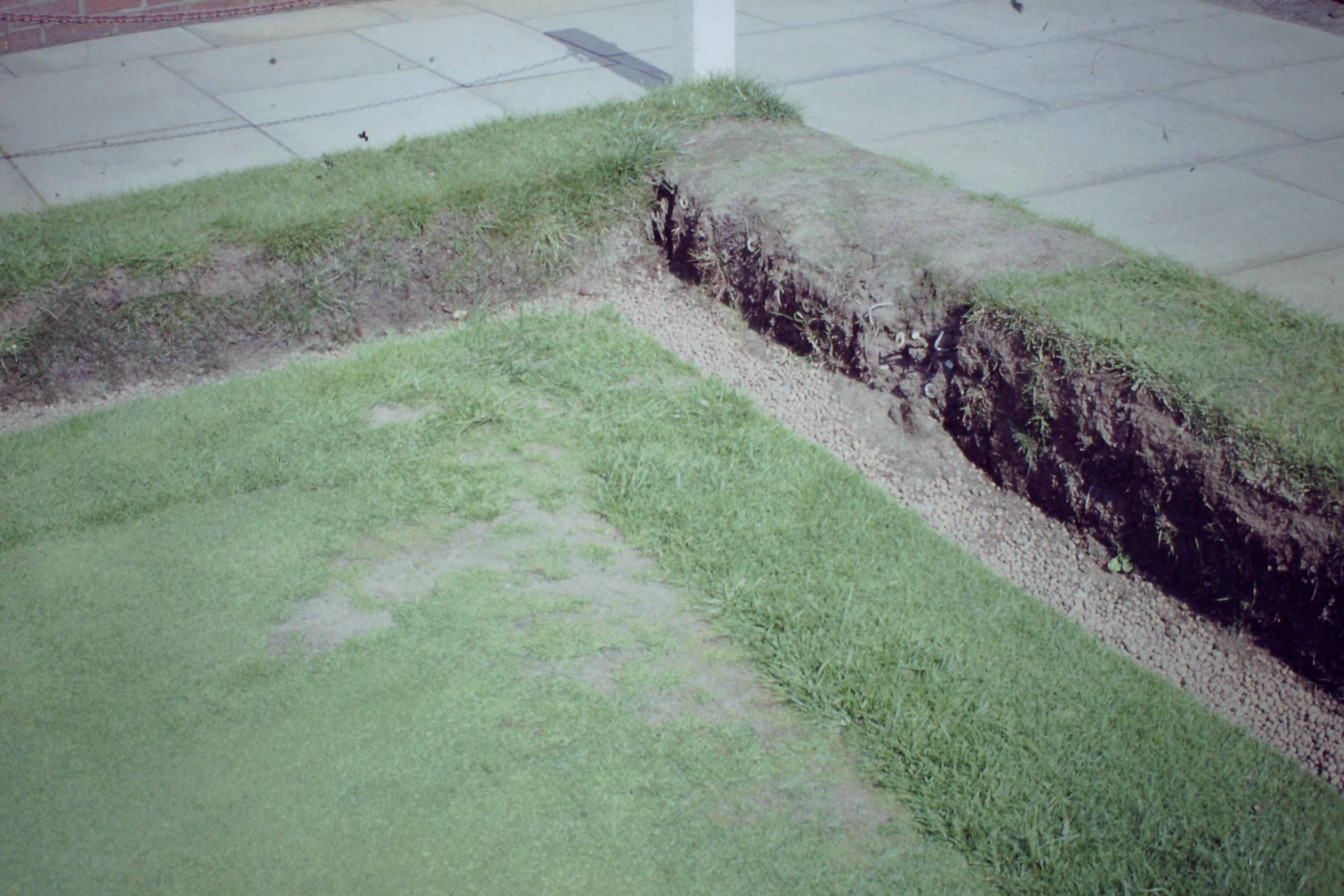
I like at this point to apply soil conditioner. I have always used seaweed meal, particularly on the most worn areas, but over the whole green preferably, at around fifty grams per square metre. It feeds the soil life rather than the grass directly, helps the new seed root, and I have found nothing better for bringing a tired green back. I have written about why seaweed should be part of every fine turf programme and about using it to cure dry patch and compaction, so I will not repeat myself here.
The autumn feed
The Autumn fertiliser does not go on with the seaweed meal. It waits until the new seed has germinated, which is usually two to three weeks after the renovation, so somewhere in the middle to the end of October. Put it on before the seed is through and it pushes the existing grass on, which can smother the seedlings; put it on as they emerge and you are feeding the old sward and the new grass together, which is what you want. What goes on is a low nitrogen, high potassium Autumn fertiliser along the lines of NPK 3.0.12 plus magnesium, iron and seaweed (anything from 12 to 20 per cent potassium is fine), to help the sward fill in any gaps and provide some moss control. The high potassium hardens the grass against frost and disease, the iron does the same and deals with moss, and the low nitrogen is deliberate: a flush of soft growth now is exactly what fusarium is waiting for. Do not be tempted by a Spring feed left over in the shed. I explain what to look for on the bag, and which products I would choose, in the best fertilisers for autumn and winter.
If moss is already established, a dressing of sulphate of iron now will blacken it so it comes out with the scarifier, and it hardens the grass at the same time. If there are any wet sour areas a dressing of granulated charcoal, along with a little extra forking, will help to alleviate the problem.
Top Dressing your Bowling Green
The final operation in the renovation programme is an application of topdressing. Straight sand should be used but it must be long term as switching between a mix and straight sand causes a multitude of problems. Whatever is used must be of good quality that has been tested and cleared by a reputable laboratory to ensure it will not cause drainage problems. I like at least seventy five per cent of the sand to be in the half to three quarter mm range for optimum performance.
Rate and finish
The required application rates will vary a little depending on the severity of the previous operations but on average around two kilos per square metre would be a good Autumn dressing, which on a standard sized green is somewhere around three tonnes. It must be well brushed in using a drag mat or a tru-lute to give a smooth level surface. Choose a dry day, and if the green has been hollow cored, make sure the holes are filled and the surface is true before you put the mat away. A dressing left sitting on top of the sward will smother it.
A word on quantity: it is very easy to under-dress a green because three tonnes of sand looks like a great deal of sand. Get it on. The heads will want a little extra, and a supply kept back for the Spring is never wasted. I cover topdressing in more depth, including the in-season dressings, in the top dressing section of the definitive guide, and for lawns rather than greens in topdressing your lawn in autumn and winter.
After the Renovation: Autumn and Winter
One final note on the Autumn renovation. Two or three weeks after seeding, watch for the new grass coming through: that is the cue for the Autumn feed above, and it is also when to start mowing again. Do not be frightened of cutting the new grass. It will come to no harm as long as the mower is sharp, which it should be at all times. Many clubs make the mistake of then just leaving the green to its own devices until the next Spring. If you want a good quality green right from the start of the season then it has to be looked after right through the Autumn and Winter. That means keeping up the slitting, cutting whenever you get reasonably dry weather and the grass has been growing, switching off the worm casts at least once a week, never letting leaves lie on the surface, pushing off any standing water (and noting where it lies, because it shows you the low spots to raise with forking and dressing), and putting iron on every four to six weeks from mid-November to keep the moss down, aiming for three applications though the weather may only allow two. If fusarium shows up, spot treat it with a strong sulphate of iron spray, two and a half to three kilos to a knapsack fill; there is no need to do the whole green. And no work on the green while there is a white frost on it. Walking on it once the white has lifted does no harm, but wait until the frost is out of the surface before you do anything else. The Winter programme is laid out month by month in a full year’s maintenance of a bowling green, and the run-in to the new season in the February to do list and spring preparation for any bowling green.
Everything in this article, the seed, the seaweed meal, the autumn feed, the iron and the top dressing, is part of the bowling green package I put together for clubs, which lets a committee budget for the whole year in one go, with advice by phone or e-mail included. You can read more about how I work with bowling clubs, and if any club would like further information or some advice on their own green, then do not hesitate to contact me by e-mail or on the phone.
All the best,
Duncan.

Would like as much information as possible to obtain good running speed and machine cutting heights.
we hollow tined scarified seeded and dressed with washed sand in september, but the green is not growing well and is very patchy and bumpy in places.we tried some extra seeding in may because of late frost but still not growing well.have put liquid fertilizer to help boost it but still not doing much.any tips would be much appreciated.
Hi Tommy, There is a full guide to bowling green maintenance on this web site, including over seeding. The most important thing is to ensure good contact with the soil when applying seed, so using a machine such as the Graden, or at the very least a good scarifier, are important. Top dressing with good quality sand, and seaweed meal, is also important to aid germination.
I hope things improve for you.
Duncan.
I have low spots on the bowling green … Can I lift the turf, raise the level by filling with a garden Centre compost(mixed with top dressing) and then relay the turf.
Or should I raise the level with top dressing only be fire relaying the turf