Bowling Green Winter Maintenance: November to February
The green closes, the renovation is done, and for most clubs that is the last anyone looks at it until the daffodils are out. It is the commonest mistake in the bowling year, and it costs you in April. A green that is checked once a week and trimmed, slit and ironed when the weather allows comes out of the winter firm, clean and free of moss. A green left to itself comes out thin, soft and mossy, and the first two months of the season are spent catching up.
I am Duncan Gray. I spent my working life in greenkeeping, latterly in charge of nine bowling greens for Kyle and Carrick, including Ayr Northfield for the World Championships, and this is the winter routine I have followed on greens every year since. None of it is hard. Most of it is a walk round with a switch and a fork. The point is to keep doing it.
Some of the links below go to our own shop. If you buy through them we may earn a small commission, at no extra cost to you. I only point you at products I use on a green myself.
Jump to a section:
- The two rules that apply all winter
- The weekly walk round
- Mowing: the winter height, and when to cut
- Slitting through the winter
- The iron programme: mid-November to late February
- Fusarium, worms and leatherjackets
- Ditches, banks and the trees
- Month by month: November to February
The two rules that apply all winter
No work on the green while there is a white frost on it. Not the mower, not the fork, not the sprayer. Walking on it once the white has lifted does no harm, but wait until the frost is out of the surface before you do anything else. Frost is the one thing in the winter that can do lasting damage in a morning, and it is entirely avoidable.
A sharp, well set mower. A blunt mower tears the leaf instead of cutting it, and a torn leaf in cold wet weather is an open door for fusarium. If the mower has not been sharpened since the summer, get it done before the winter trimming starts, and get it booked in again with the agent for February, before they are busy.
The weekly walk round
Whatever the weather, walk the green once a week. You are looking for five things, and each one has a job attached.
- Leaves. Do not let them lie on the green for any length of time. They block the light and hold moisture against the sward, which is exactly what fusarium wants. Scoop them or use a blower. A blower is the easiest job but costs a lot for something used a few times a year, so a leaf scoop and a wheelbarrow will do.
- Worm casts. Switch them off at least once a week, and always before mowing, or the mower smears them flat and you get a bare patch under every one. If casting is really bad, iron or sulphur pellets used properly increase the surface acidity and reduce it; worms do not like iron, do not like sand, and are not nearly as active in a well aerated soil, so the rest of this programme discourages them anyway.
- Standing water. Push it off whenever you can; left lying, it kills grass. But before you do, note where it lies, because it shows you the low spots. Those are the areas to raise with a little extra forking and dressing in February.
- Bird damage. Rooks and starlings pulling at the turf over the winter usually means leatherjackets underneath (more on those below). Repair the damage with a little top dressing and a pinch of seed. Germination is much reduced over the winter, but it still happens in a mild spell anywhere in the UK, so it is worth doing rather than leaving a hole until spring.
- Disease. Fusarium shows as small orange-brown patches, often with a white or pink fringe on a damp morning. Treat it the week you see it, not the month after. The treatment is in the disease section below.
Mowing: the winter height, and when to cut
The day the green closes the height of cut goes up to between six and eight millimetres, and it stays there until you start bringing it down again in March. Which end of the range depends on the green. Six for a firm green with very little thatch; eight for a softer green, usually an old soil green with some thatch in it that lies wet in winter. The reason is that the height on the mower is a bench setting: on a soft surface the machine sinks in and cuts lower than the setting, so eight on a soft green gives much the same actual cut as six on a firm one.
Mowing does not stop for the winter. It drops to a light trim whenever there is growth to take off, in any reasonably dry, mild spell. Mow in at least four different directions alternately. Do not be frightened of cutting the new grass from the autumn overseeding: it will come to no harm as long as the mower is sharp, which it should always be. Trimming keeps the sward even, lets the wind dry the surface, and takes off the soft top growth that disease lives in. A green left long and shaggy over the winter is a green with fusarium in it by January.
Slitting through the winter
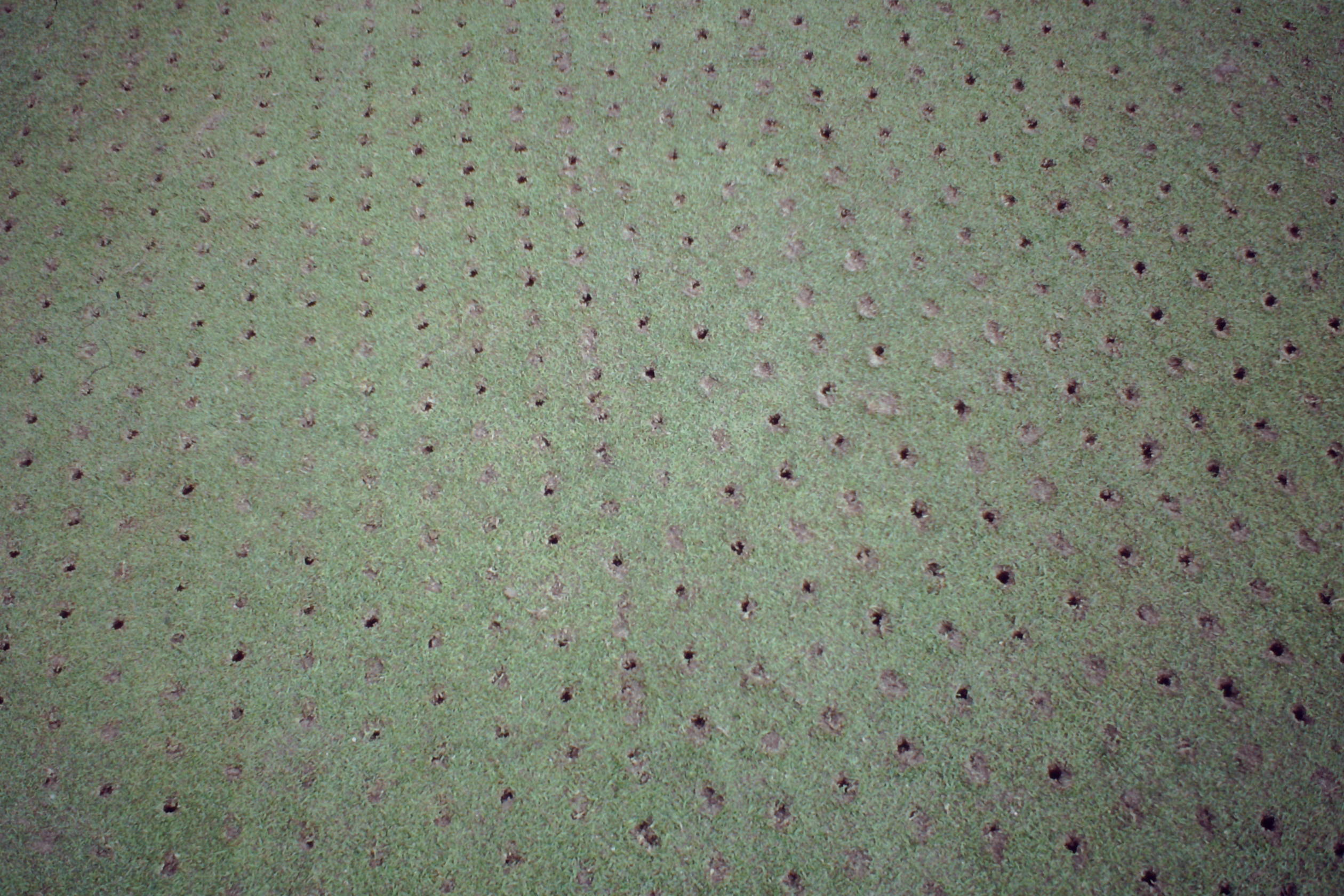
Winter is when the aeration that carries the green through the following summer gets done. Deep slit roughly once a month from October to March, with chisel tines in between, whenever the ground is neither frozen nor waterlogged. Always slit in the same direction; it is more effective, and it avoids cutting the turf into squares that can lift out. In an ideal winter a green is spiked four or five times between the close and March.
A green that has been slit all winter has a far better root system, drains faster, and takes drought, wear and disease much better in the season. If the club has no spiker, a fork and a few willing volunteers on the heads and the wet areas is surprisingly effective: tines straight down, handle rocked back and forward ten centimetres or so, then move on by the width of the fork for a square pattern of holes. Run the mower or a light roller over afterwards to level any disruption. I go into the machines in the aeration section of the definitive guide and in aeration explained.
Hollow coring and verti-draining are autumn renovation jobs, not winter ones, and only for a real reason. Scarifying is never a winter job: exposing the crown of the plant to frost can kill it.
The iron programme: mid-November to late February
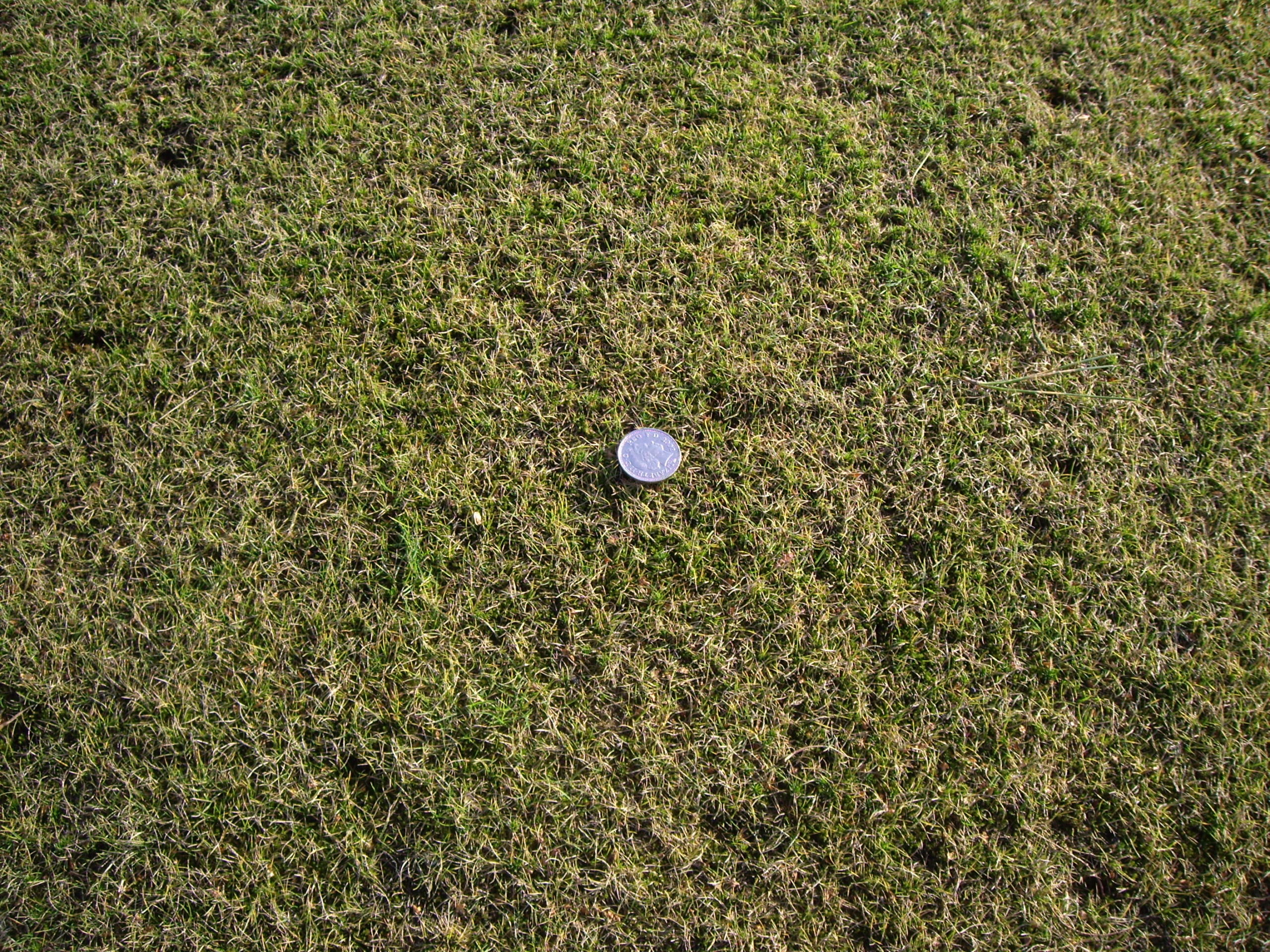
Iron is the winter treatment. It hardens the grass against frost and disease, keeps the moss down, and greens the sward up without pushing soft growth. Apply it every four to six weeks from mid-November through to late February, weather permitting, in a dry, frost-free spell. Aim for at least three applications. A hard frost, a very wet spell or high wind will all stop you getting one on, so some winters you will only manage two; take the day when it comes.
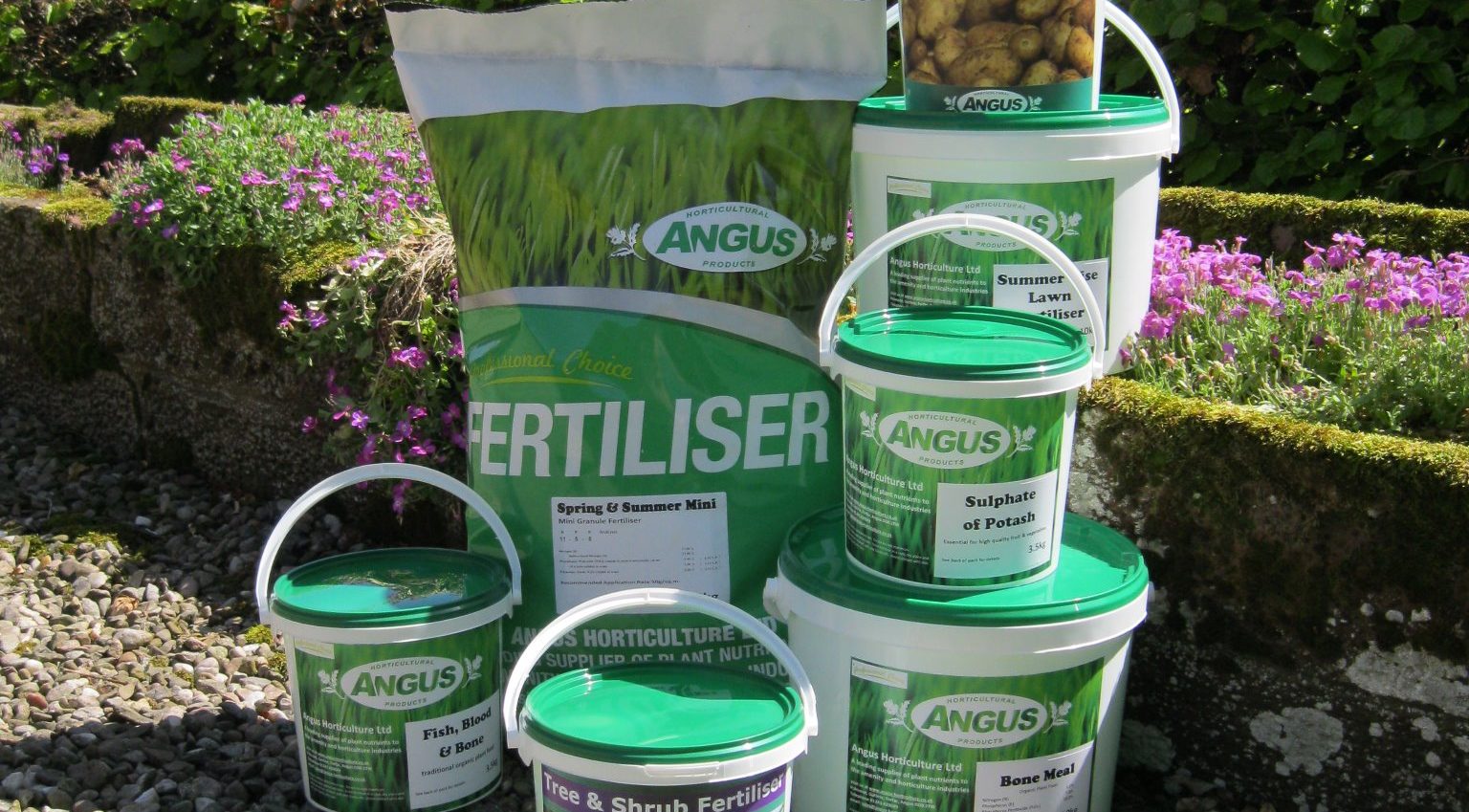
What I use now is dissolved sulphate of iron, five kilos per green dissolved in water and put on with a knapsack or a walk-behind sprayer. Buy it ready dissolved if you do not want the bother of mixing, or buy the crystals and mix your own. Ready-made lawn sand does the same job, at around fifty kilos a green, but it is getting harder to buy now that sulphate of iron is no longer a by-product of the steel industry. If the green is hungry, a little urea can go on with the iron, but only if it is needed; a green that had its autumn feed at the right time will not need it. There is more on the products, and what the numbers on the bag mean, in the best fertilisers for autumn and winter.
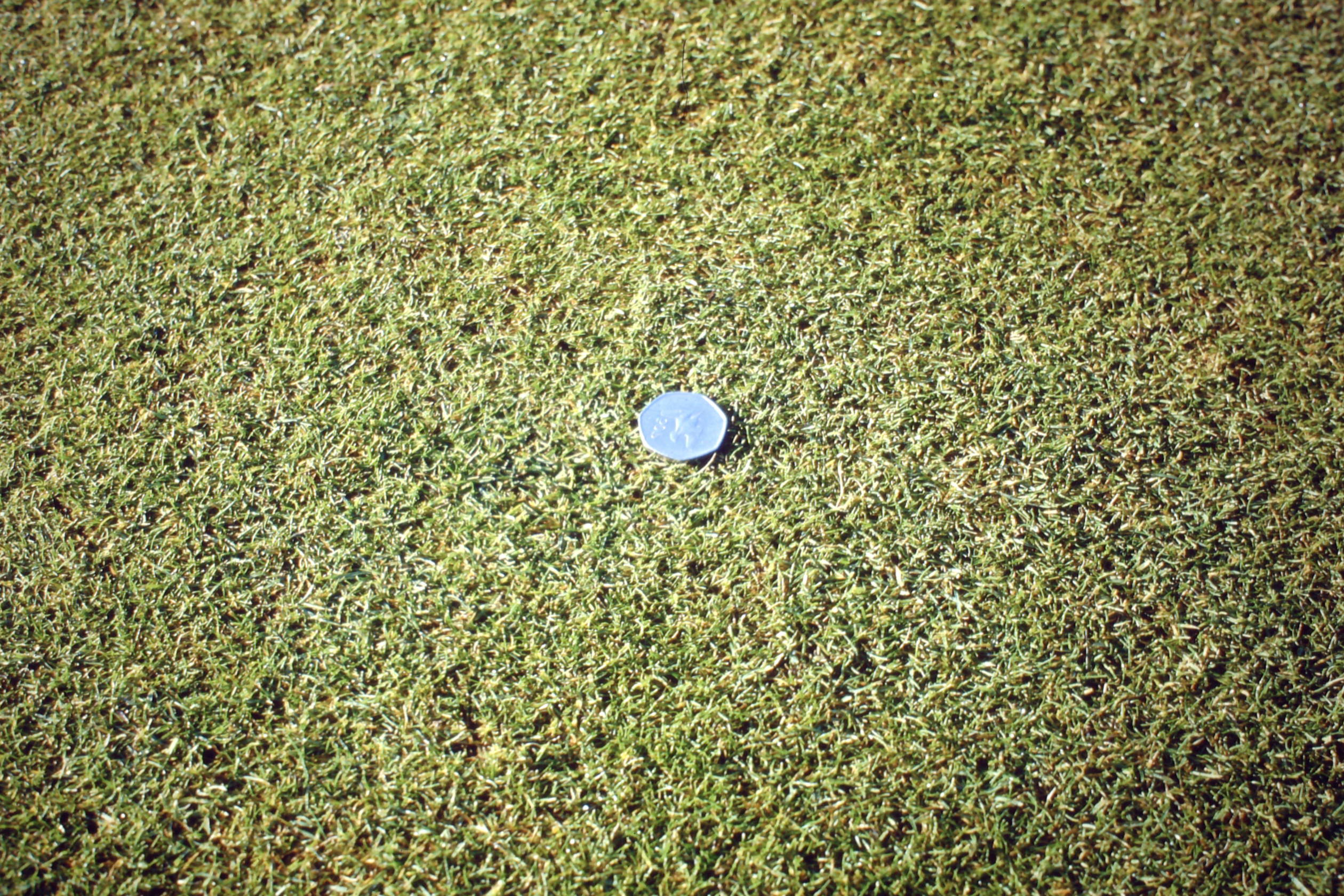
The moss blackens within a week or two of an application and is then dead; it comes out with the spring scarify in April rather than being raked out now, when you would open the surface up to the frost. The last application of the winter goes on in late February, with a little nitrogen, as the run-in to the season: that one is in the February to do list.
Two warnings. Sulphate of iron stains paths and stonework, so sweep any spill before it gets wet. And never put it on in frost or on frozen ground.
Fusarium, worms and leatherjackets
Fusarium is the winter disease, and it is a disease of soft, wet, unaired turf. A green on this programme, trimmed, slit, ironed and kept free of leaves, will rarely get a bad attack; I have not used a fungicide on a green in more than forty years. Some patches will occur. Spot treat them the week you see them with a strong sulphate of iron spray, two and a half to three kilos to a knapsack fill, on the patches themselves, with a little top dressing on the patch as well. There is no need to do the whole green. Keep a fungicide in the shed for a bad year, and hope it sits there.
Worms are dealt with above: switch the casts weekly, and let the iron and the sand do the rest.
Leatherjackets, the grubs of the crane fly, are the pest to watch for. They eat the roots and shoots over the winter, and the damage shows as yellowing, thinning turf that lifts easily, and as birds tearing at it. Very cold winters reduce the population. If they are a known problem on your green, the treatment windows are in the autumn: nematodes watered on in September and October while the soil is still above about twelve degrees, or Acelepryn, the one insecticide now approved for fine turf, applied in late October to early November by a certificated contractor, with the green spiked beforehand so it gets in. One litre does up to eight applications on a green, so it is worth sharing with other clubs. The detail is in the definitive guide. By December it is too late to treat; note the damage, repair it with dressing and seed, and plan for next autumn.
Ditches, banks and the trees
The surrounds are a winter job because there is time for them, and because leaves are down. Keep the ditches clean and do not let leaves and debris build up in them; once they are clear, top up whatever ditch material the club uses. Inspect the banks for damage and repair them with a good quality turf of slow growing grasses. A new bank face may slope slightly inward to deflect the bowl downwards, never outward.
Trim back any trees overhanging the green. The last thing you want is branches over the green: shade is the big enemy of turf grass, and a shaded corner is a mossy, diseased corner every year until the branches come off. One trim does not keep them back for long. It has to be done every year, and December to February, when the trees are bare and the green is quiet, is the time.
Month by month: November to February
November
The first real winter month. The renovation is finished and the new grass is through. Surrounds tidy, ditches clean, leaves coming off. Trim at six to eight millimetres in mild spells. One deep slit if the ground allows. The first iron goes on from the middle to the end of the month, in dry, frost-free weather. Watch for fusarium, and spot treat it. If Acelepryn is being used for leatherjackets, the window closes in early November. By the end of the month the green should still be reasonably green, the sward healthy, and the first iron on.
December
The quietest month, and the one the committee forgets. Walk the green weekly. Repair any bird damage with a little dressing and a pinch of seed. Leaves off, casts switched, standing water pushed off and noted. Trim in mild dry spells. One deep slit if the ground allows. The second iron if it is due, four to six weeks after the first. Get the trees done.
January
The same as December, and the same discipline. Nothing much grows, so nothing much needs doing, which is exactly when clubs stop looking. Keep looking. The honest minimum is the weekly walk round and a trim when the weather lets you. Iron if it is due. Book the mower in with the agent for the service and sharpen, before they are busy.
February
Mid-February is where the planning for the season starts, because by then it is obvious where the green has suffered. Examine it closely for damage from disease, birds, frost and compaction; poor drainage shows as yellowing grass at best and dead grass at worst. Aerate the problem areas, dress any area still uneven at about a kilo per square metre (no more than that at this time of year, or you invite disease), charcoal or calcified seaweed on any area soured by standing water, and the last of the winter irons late in the month with a little nitrogen. Banks repaired, ditches cleaned and topped up, the mower back from the agent sharp. The full list is in your bowling green February to do list, and from there the season runs into spring preparation for any bowling green.
Your winter checklist
- Height of cut up to six to eight millimetres the day the green closes; trim in mild dry spells, four directions.
- Walk the green weekly: leaves, casts, standing water, bird damage, fusarium.
- Deep slit once a month when the ground allows, same direction every time.
- Iron every four to six weeks from mid-November to late February, five kilos of dissolved sulphate of iron per green. Aim for three.
- Spot treat fusarium the week it shows: two and a half to three kilos of sulphate of iron to a knapsack, on the patches.
- Ditches clean, banks sound, overhanging trees cut back.
- Mower sharpened before the winter trimming and booked with the agent for February.
- No work on the green while there is a white frost on it.
The whole year, winter included, is laid out by month in a full year’s maintenance of a bowling green, and the autumn work that sets the winter up is in autumn bowling green maintenance and renovation. The sulphate of iron, the seed for repairs and the dressing are all part of the bowling green package I put together for clubs, and if the green has been let go over a few winters and you would like someone to walk it with you, that is what I do.
All the best,
Duncan.