
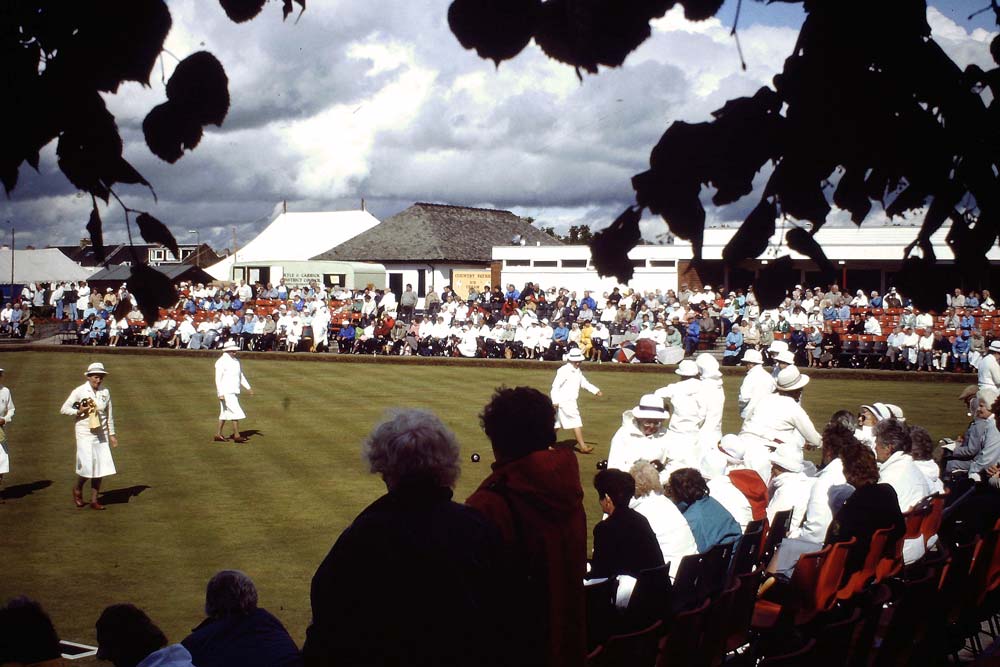
A Full Year’s Maintenance of a Bowling Green
Some of the links in this article go to Amazon or to our own shop. If you buy through them we may earn a small commission, at no extra cost to you. I only point you at products I would be happy to use myself.
Introduction
For this guide I am starting the year at the start of the Spring period, the beginning of March, with the run up to the start of the playing season in April. If you are in the Southern part of the UK the timing can often be two weeks earlier, and from Central Scotland North can certainly be later, so take this into account.
Mid to late March
- Apply High iron Spring fertilizer, something like 9.0.0. 11%fe. Be ready for the first mild spell of weather.
- Check all equipment such as rink markers etc to ensure you are not caught out on opening day. By the beginning of March every machine should be serviced and all the season’s materials in the shed.
- Lower height of cut at half mil stages from Winter height to around six mil by end of March, and mowing frequency up to twice per week by same stage.
Lead up to opening day in April
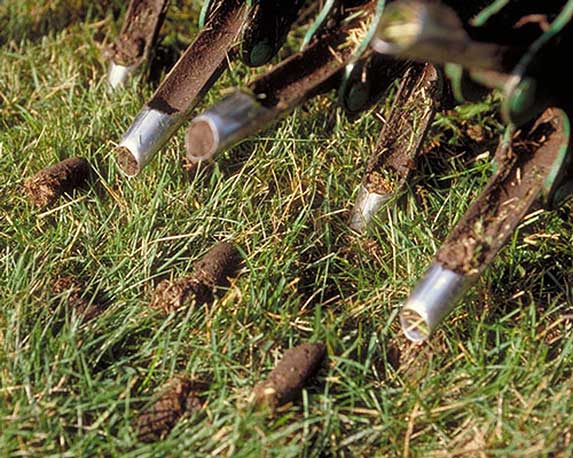
- Ten days to two weeks after applying Spring feed the green should be spiked with chisel or pencil tines, then scarified.
- Follow this by mowing to remove debris, then top dressing if required to help with any remaining thin areas.
- Spray with wetting agent and seaweed liquid. Both can be got here. As well as the lawnsforyou shop.
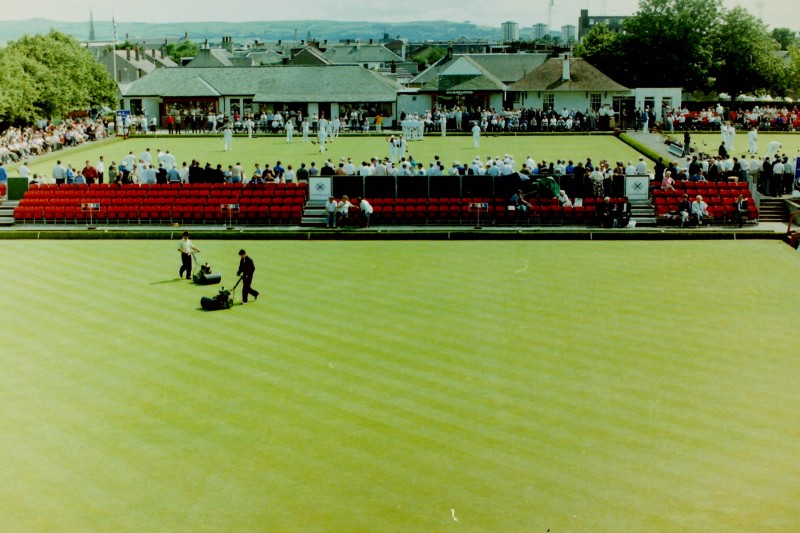
- Step mowing up to three or four times per week, with mowing height down to four or five mil by opening day, depending on where you are in the country. Bring it down gradually, keep the mower sharp, and finish any small repairs before play starts. A frosty morning still means no work on the green.
- If a roller is available give the green a roll on the morning of opening day.
From opening day throughout the season
- Verti-cut every two weeks.
- Once per month precede the verti-cutting with spiking using chisel or solid tines, not deep slits: in summer a slit opens up in hot dry weather and dries the green out.
- Keep an eye out for disease. A green on this programme should rarely get a bad attack, but keep a fungicide on hand in case. Most outbreaks are dealt with by spot treating with a little sulphate of iron, one of the best disease killers there is; there is no need to spray the whole green.
- Mow as often as possible at between four and five mil depending on the speed requirements and grass content.
- If not mowing any morning ensure dew and debris are switched or brushed ready for play.
- Roll weekly, or before competitions if at all possible.
- Check mower for sharpness and setting at least once per week, and preferably every day.
- Move playing head settings at least every second day, more if during wet weather, or heavy play.
- If wear is apparent after moving the heads, apply some top dressing on a weekly basis.
- Watering will be required in dry weather but better to soak thoroughly every three days or so than to regularly water lightly as this ensures water gets to the roots. Spiking and wetting agent application are important to help achieve this.
If the labour and equipment is available the following is advised.
From the start of May, apply a liquid fertiliser every six weeks or so until the middle of August, and stretch or shorten the gap with the weather: a mild, damp spell uses up the nutrients faster, and in a dry spell you need far less on. Each feed is two and a half to four litres of product per green, carried in about fifty litres of water: two fills of a 25 litre pedestrian sprayer, half a green to a fill. Walking speed changes the rate, so run a fill of plain water over half a green first to find the pace, then mix for that area. Halfway between each feed, so roughly every three weeks, apply liquid seaweed with wetting agent at 50% rate. The seaweed is a conditioner that helps the soil make use of the fertiliser. Ideally carry out a light spiking and a verti cut immediately before the applications. Otherwise follow the instructions below.
Mid to late May
- Apply liquid fertilizer with wetting agent straight after spiking and verti-cutting.
Late June to early July
- Apply liquid fertilizer with wetting agent straight after spiking and verti-cutting.
Early August
- Apply liquid fertilizer with wetting agent straight after spiking and verti-cutting.
Roughly half way between each of these.
Apply seaweed based liquid conditioner, with some wetting agent.
Early September
- The last of the summer feeds goes on in early September at the latest. The sward should look healthy and fresh, with a little wear on the heads, which is normal.
- Everything for the renovation, the seed, the seaweed meal, the dressing and any hired machinery, should be ordered and on site by the middle of the month. The bigger machines need booking several months ahead.
Autumn renovation
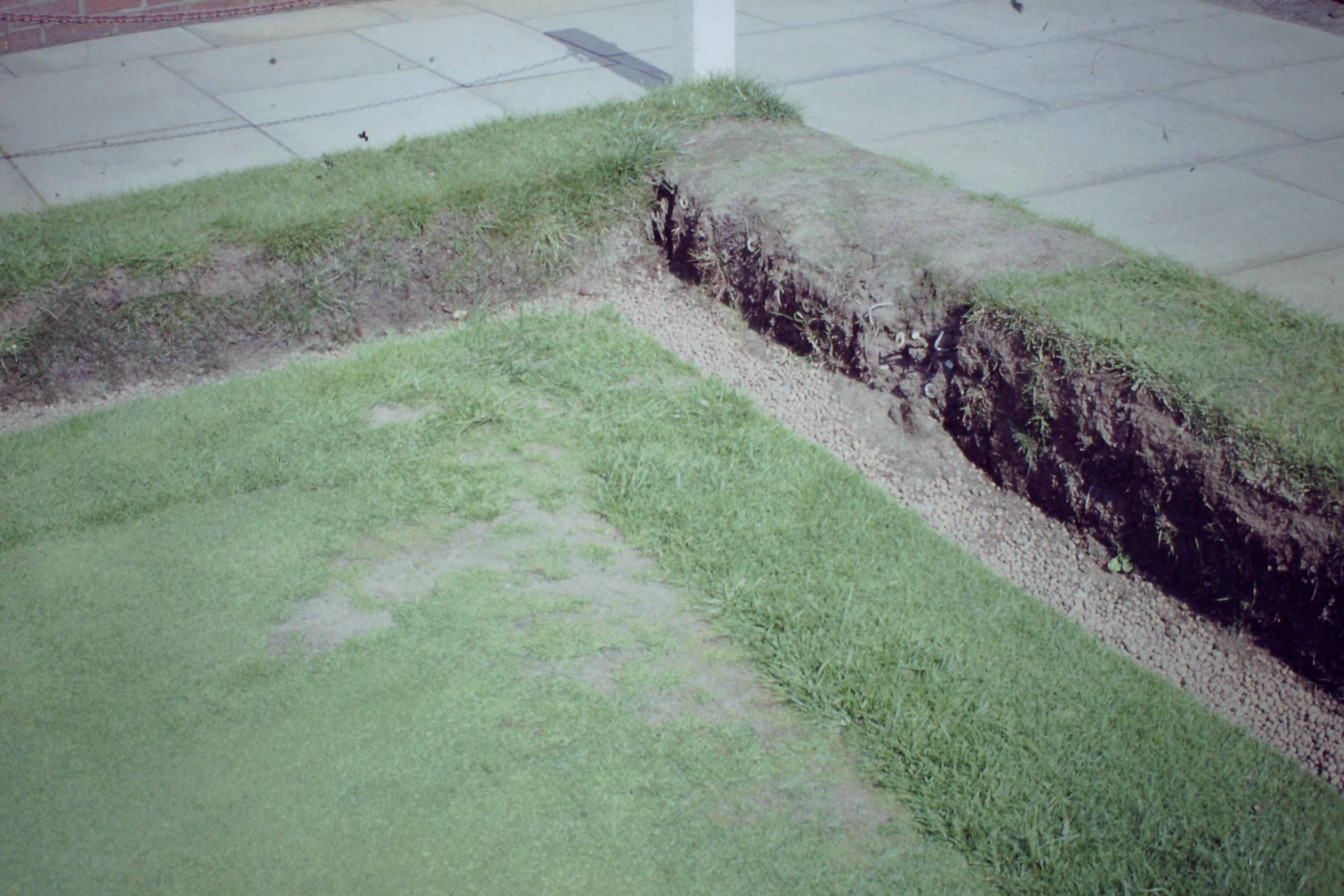
Intensive deep spiking is required, either by slitting or in severe situations by verti-draining as well. Hollow coring should be avoided if possible but in certain situations can be justified( see full guide). Follow by scarifying in two directions, no need for diagonal, then by over seeding and top dressing. Finally apply wetting agent with seaweed. The Autumn fertilizer waits two to three weeks, until the new seed has germinated: put it on earlier and it pushes the existing grass on, which can smother the seedlings. Start the renovation the day the green closes and have it finished by the middle of October at the latest, wherever you are in the UK; the earlier it is done the more recovery you get.
Autumn /Winter
- Raise the cutting height to between six and eight mil: six on a firm green with very little thatch, eight on a softer green, usually an old soil green with some thatch in it that lies wet in winter. The reason is that the height on the mower is a bench setting: on a soft surface the machine sinks in and cuts lower than the setting, so eight mil on a soft green gives much the same cut as six on a firm one. Mow once per week till end of October, then keep trimmed as necessary over the Winter. Mow in at least four different directions alternately. Do not be frightened of mowing the new grass once it is through; it comes to no harm as long as the mower is sharp.
- Check regularly to ensure debris such as leaves are not smothering the surface. Keep the ditches and surrounds clean, and trim back any trees overhanging the green: shade is the big enemy of fine turf, and one trim does not last, so do it every year.
- Repair any bird damage over the Winter with a little top dressing and a pinch of seed. Seed will still germinate in a mild spell, even in midwinter.
- No work on the green while there is a white frost on it. Walking on it once the white has lifted does no harm.
- Deep spike once per month if weather permits.
- Iron every four to six weeks from mid November through to late February, weather permitting. Aim for at least three applications: a hard frost, a very wet spell or high wind will all stop you getting one on, so some winters you will only manage two. A little urea can go on with it if the green is hungry, but only if needed. If fusarium shows, spot treat it with a strong sulphate of iron spray, two and a half to three kilos to a knapsack fill; there is no need to do the whole green. My preference now is dissolved iron sulphate, three kilos per green (one and a half kilos to each 25 litre sprayer fill), either bought ready mixed or mixed with water yourself, which can be bought in the lawnsforyou shop. Ready made lawn sand does the same job but is getting harder to buy, because sulphate of iron was a by-product of the steel industry and supply has declined with it.
If you would rather not take all of this on yourself, I run a bowling green maintenance service for clubs, and a yearly package that covers the products and the programme for a full season.

What type of roll do you recommend for bowling greens?
Will you require a soil sample for the maintenance pack so we get the correct products.
What do you mean by moving player head settings do you mean moving the rinks over to the left or right on the on the green because of wear and tear.
To the different color markers
Just starting bowling green maintenance would be grateful for your answer and response
Thank you Mr Robert Clark