Artificial Grass Offers a Realistic, Quality Lawn Grass Alternative
Artificial grass, fake grass, astroturf, synthetic lawn. Whatever you want to call it, artificial lawns are an oft discussed topic in lawn care circles, so I thought I should post a bit of info on when, where and how to use them, and what separates a good one from a bad one.
Before we have a look at artificial grass, I just need to point out, as any reader of my site will know, that I am a grass man. I spent my working life as a greenkeeper and my passion is looking after real, living grass, whether on a lawn, a golf course or a public park. Saying that, I am also pragmatic, and look for the best possible solution for a person and their specific situation. And I can honestly say there are many situations that would make artificial grass a viable, and sometimes preferable, alternative to real lawn grass.
We supply and lay artificial grass for customers around Dumfries and Galloway, and I have fitted a good number of artificial lawns over the years. Every time it was for a good reason, and every time the customer has been really happy with the result. Have a look through the rest of this article to see if artificial grass might be for you, what to look for when you buy it, and how it is laid. If you would rather just talk it through, get in touch and I will happily advise.
Some of the links in this article go to Amazon or to our own shop. If you buy through them we may earn a small commission, at no extra cost to you. I only point you at products I would be happy to use myself.
Jump to a section:
- When artificial grass is the right answer
- When it is the wrong answer, and what to do instead
- What makes artificial grass look realistic
- Types of artificial grass and pile heights
- What artificial grass costs
- How artificial grass is installed, with the kit you need
- Looking after it
- Buying artificial grass, and having it laid
When Would You Use Artificial Grass?
Here are the places where artificial grass has the advantage over real lawn grass:
- In areas of very heavy shade where real grass will struggle to grow, under trees or on the north side of a tall building or fence.
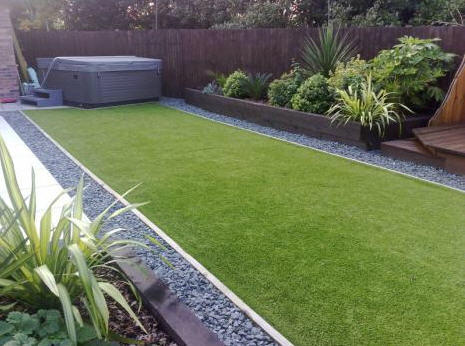
- On small, heavily used areas where real grass will be worn too badly. A wee back garden with young children, a dog, bikes and toys is the classic case.
- On a lawn that lies wet for half the year, where the family cannot use it without bringing the garden into the house.
- Where the owner just does not have the time or inclination for mowing, never mind the general maintenance required to keep grass healthy and green.
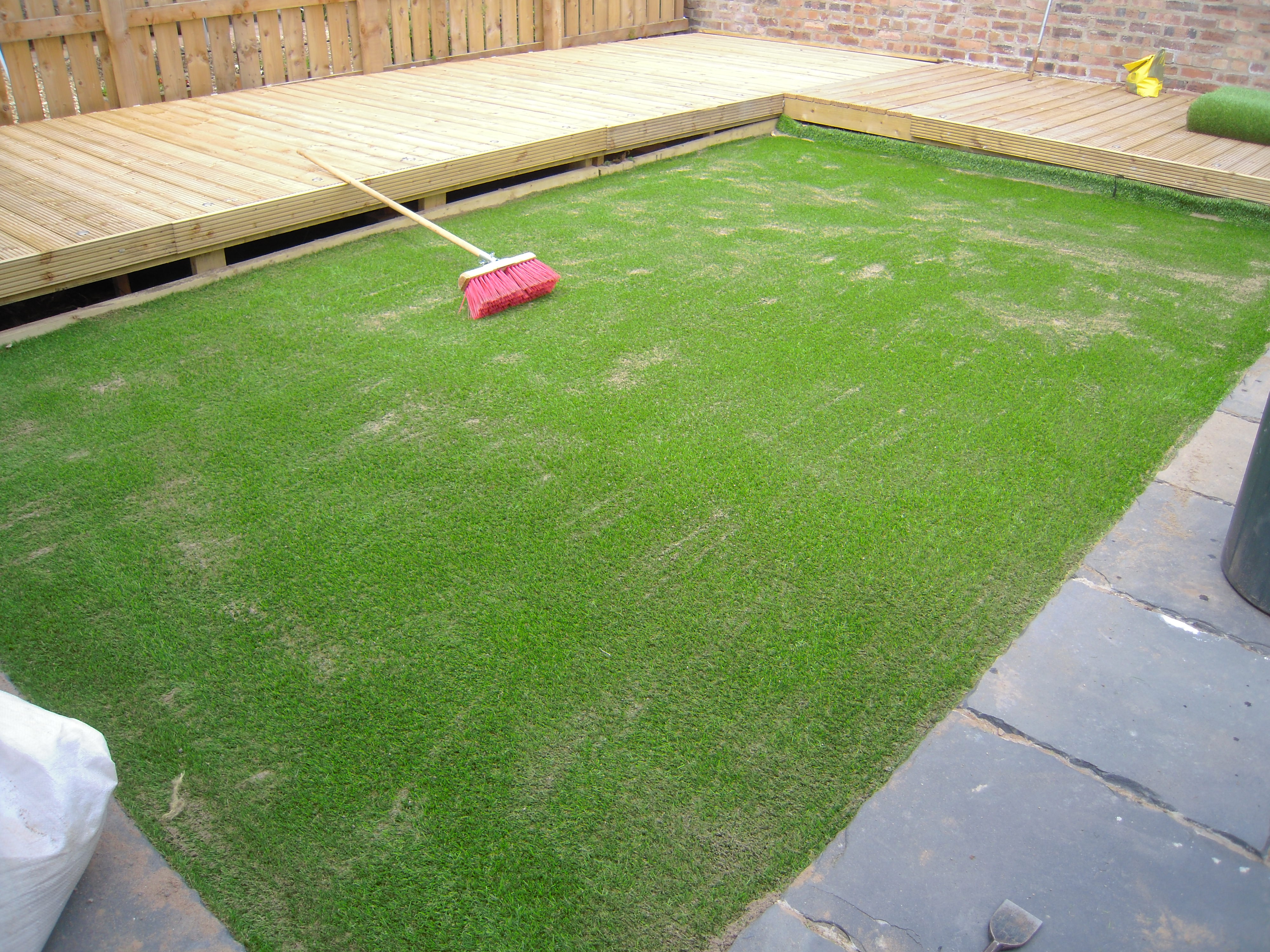
One job we did in Dumfries is a good example. It was a small, wet back garden, unsuitable for a young family, so artificial grass gave them a dry, clean surface they could use in any weather. The whole lawn was installed in three hours or so, and it is great long term value for money. You can see that one, and some of our real turf jobs, in our turfing projects.
Areas that get a hammering, such as around a swing, a trampoline or the garden furniture, can also have artificial turf fitted on their own, leaving the rest of the lawn as real grass. Done well, with the pile at a sensible height, the join between the two is far less obvious than you would expect.
When Artificial Grass is the Wrong Answer
A lot of people who land on this page are actually looking for an alternative to artificial grass, so let me be even handed. I would not put artificial grass down in these situations:
- A reasonable sized lawn that is simply a bit tired. Thin, mossy or patchy grass is nearly always a feeding, drainage or mowing problem, and all three are cheap to put right compared with a couple of thousand pounds of plastic. My annual lawn care calendar is the place to start.
- Shade, unless it is really heavy. Light to moderate shade is a seed choice, not a reason to give up. I explain what works in growing grass in shady areas, and our own shade and drought grass seed is the mix I use for it.
- Wear from a dog. Often a hard wearing ryegrass mix, a bit of routine and a few habits will sort it, and I have written up my dog friendly lawn tips. Artificial grass is the last resort there, not the first.
- A lawn that lies wet. Water does not care what the surface is made of. If the ground underneath does not drain, an artificial lawn laid straight on top will sit just as wet, and smell into the bargain. Either the base has to be built properly (see below) or the drainage has to be fixed first. Managing wet weather problems in turf covers the causes.
- If wildlife matters to you. An artificial lawn is a plastic carpet. Nothing lives in it or under it, it gets hot in the sun, and one day it will need lifting and disposing of. A real lawn with a bit of clover in it feeds the bees, the worms and the birds, and costs a fraction of the price. That is a fair point against artificial grass and I will not pretend otherwise.
If none of those apply, or you have tried them and the garden still is not usable, read on.
What Makes Artificial Grass Look Realistic?
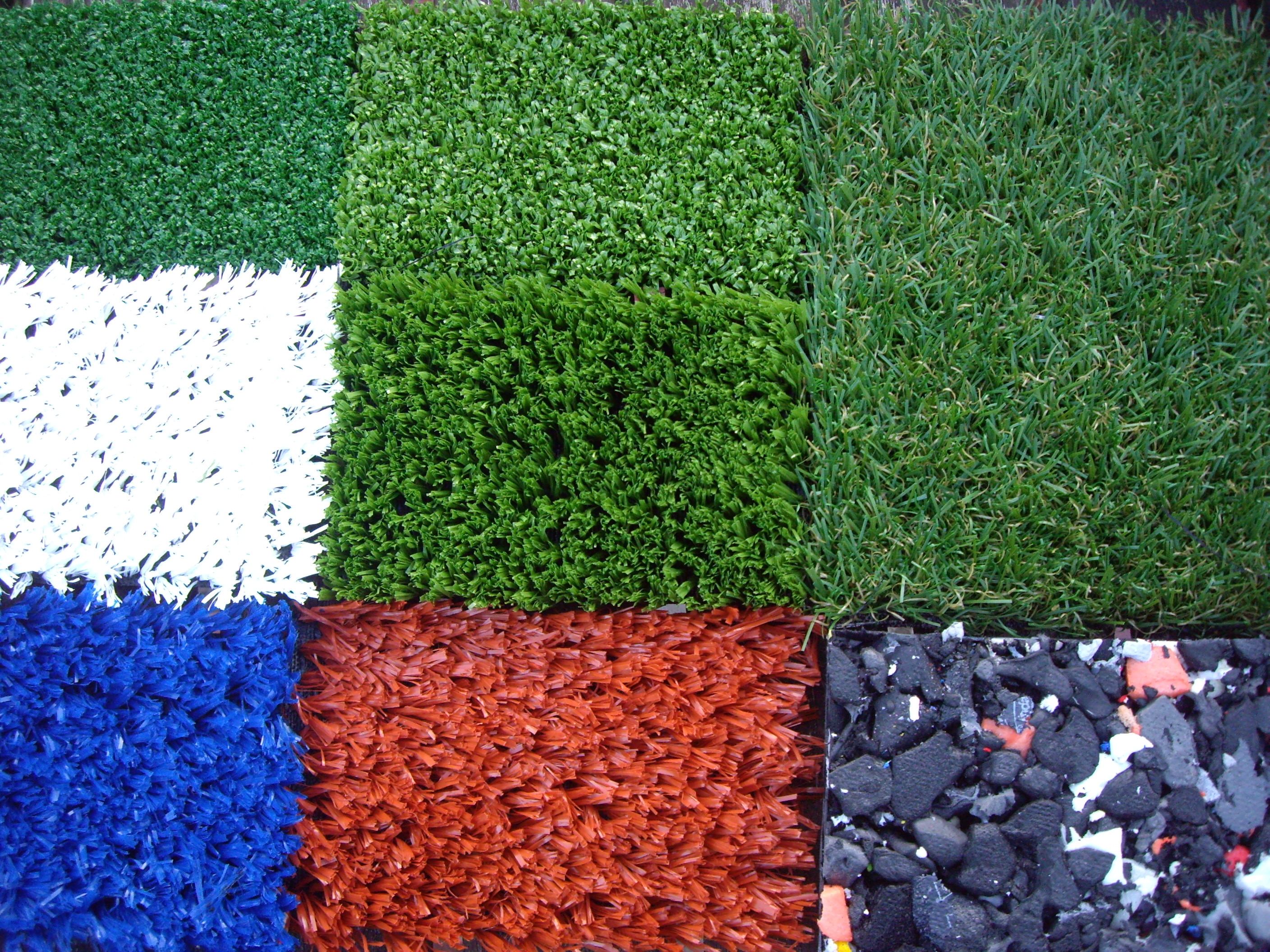
This is the question I get asked most, and it is the right one to ask, because the difference between a good artificial lawn and a bad one is not the fitting. It is the grass. Here is what to look for.
Pile height. Thirty to forty millimetres reads as a lawn a week or so after mowing, which is what most people want. Under twenty millimetres and it looks like a doormat. Over forty and it flattens under foot and looks shaggy.
Colour. Real grass is never one colour. A good artificial grass has two or three shades of green in the blades and a curly brown or straw coloured “thatch” down at the base. A single flat green is the giveaway every time.
Blade shape and shine. Cheap grass has flat, shiny blades that lie down and glint in the sun. Better grass has blades with a spine (you will see them described as C shaped, W shaped or diamond) which stand up, spring back and have a matt finish.
Density and weight. The more stitches per square metre and the heavier the roll, the fewer gaps you will see down to the backing. A decent lawn grass weighs well over two kilos a square metre.
Backing and guarantee. Look for a latex or polyurethane backing with drainage holes right across it, and yarn that is UV stabilised with a written guarantee against fading. Eight to ten years is the norm for a good product.
Get samples. Never buy a lawn’s worth of grass from a photograph. Order two or three samples, lay them on the ground outside, and look at them from the kitchen window in daylight. Pick the one that looks like grass, not the one that looks perfect. A dressing of kiln dried sand once it is down helps the blades stand up and adds to the realism as well, which is why we dress most of the lawns we lay.
For the lawns we fit ourselves I buy from a trade supplier, and for a whole garden that is what I would suggest you do too, ordering samples first. For smaller areas, or if you want to buy online and get on with it, these are the sort of grasses I mean:
- Tuda Grass Direct Antalya, 30 mm pile, 4 m by 6 m: a good, realistic mid height lawn grass at a sensible price per metre, and sold in plenty of other sizes.
- Artificial Grass Direct Luxury 40 mm, sold by the metre in 2 to 5 m widths: the softer, more luxurious end of the range for a lawn you will sit on rather than play football on.
- a one metre square from the same maker: buy one of these as your sample before you order the lot.
- GardenKraft 15 mm budget roll, 4 m by 1 m: fine for a path, a dog run, a balcony or a shed base. It is not a lawn and does not pretend to be.
Types of Artificial Grass and Pile Heights
Artificial grass comes in a variety of pile lengths, colour combinations and textures, so there will be one to suit your needs, whatever they are. The artificial grasses I have used range from budget fake grass suitable for a basic green covering, through top quality grasses aimed at luxury lawns, to specialised surfaces that can be used for putting, bowling or croquet. As a rough guide:
- 13 mm short pile makes a superb putting, bowling or croquet surface, and is also ideal for patios and paths. A sand dressing is optional on it, although for putting I would always dress it.
- 20 mm with a sand infill is the one for football and games areas. The sand adds wear resistance and gives a better grip for turning on.
- 24 to 40 mm are the lawn grasses, in varying colours for a more realistic look, and suitable for a wide variety of uses around the home. Of these it is really down to which one the home owner finds most attractive underfoot and to the eye.
- Shockpad tiles or a foam underlay go under any play equipment such as chutes and climbing frames, or on steps. They are easily fitted and take the sting out of a fall.
The grades can be mixed and joined together to give the appearance of a natural lawn cut at different heights, so a garden can be designed very easily to suit the needs of the whole family. There are even different colours available for anyone wanting something out of the ordinary, for pool surrounds or feature paths.
The main advantages you will find with artificial turf are these:
- It looks like real grass, only requires occasional brushing, and keeps its colour long term.
- No more mud or grass clippings carried into the house.
- Very wear resistant, with no mess or damage from kids or pets.
- A clean, safe surface for play.
- And best of all, no mowing, fertilising, aerating, weedkillers or watering.
It also works well in places you would never put real grass: patios, where it is far easier to look after than decking, swimming pool and hot tub surrounds if you are lucky enough to have them, paths, and as a floor covering for a porch or a drying room. One thing it is not is fireproof. Keep the barbecue, and especially the disposable kind, on slabs rather than on the grass, because a hot base will melt the pile.
What Does Artificial Grass Cost?
Prices move about, so take these as a guide for 2026 and get proper quotes. The grass itself runs from around ten pounds a square metre for a basic short pile to thirty five pounds or so for a top quality lawn grass. Add three to five pounds a square metre for membrane, tape, pins and sand, and if you are laying on soil, the base materials and getting rid of the spoil on top of that. Having it supplied and fitted by an installer typically comes out somewhere between fifty and ninety pounds a square metre all in, depending on how much groundwork there is and how awkward the shape. So a forty square metre back garden is likely to be a few hundred pounds in materials if you do it yourself, or two to three and a half thousand pounds fitted.
Whether it pays for itself depends on what you compare it with. Against a lawn you mow yourself it never will, in cash terms. Against a lawn you pay someone to cut every fortnight through the season, it pays back in six to eight years, and a decent grass properly laid should give you fifteen years or more. What you are really buying is a garden the family can use in any weather, and your Saturday mornings back.
How Artificial Grass is Installed
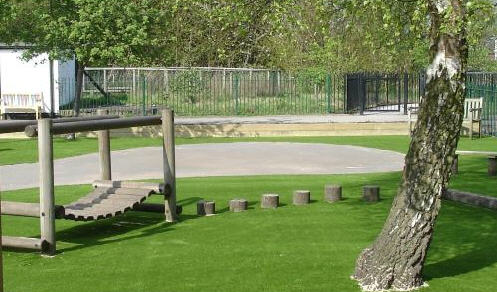
Artificial grass can be laid directly onto any hard surface such as concrete, slabs, tarmac or decking, so long as the slope carries the water away, as would normally be the case for a hard surface anyway. Sweep it clean, lay a foam underlay if you want it softer underfoot, and glue or tape the edges and joins down. That is the quick version, and it is the one that suits a patio or a balcony.
On soil it is a bigger job, and it is much preferable to lay the grass on a prepared base of hardcore that drains freely. That is a more environmentally friendly way of dealing with rain, because it soaks into the natural water table rather than running off into the drains, and it is the only way to get a firm, level lawn that stays that way. The sequence is:
- Dig out the existing turf and soil to a depth of around 75 to 100 mm and take the spoil away.
- Lay a weed membrane, then 50 to 75 mm of hardcore (MOT type 1) and compact it hard with a plate compactor. This is the layer that stops the lawn sinking.
- Screed 20 to 25 mm of sharp sand or granite dust over the top, level it, and compact that too. Any bump or hollow you leave here you will see in the grass for the next fifteen years.
- Roll the grass out, ideally in the sun for an hour or two so it relaxes, and leave it a wee bit big all round.
- Make sure the pile on every roll leans the same way, towards the house or wherever you look at the lawn from. Join the rolls with jointing tape underneath, blade to blade with no gap and no overlap, and done properly the join is invisible.
- Trim the edges with a sharp knife from the back, and secure them, either fixed to timber battens set in the ground, pinned with galvanised U pins every 25 cm or so, or tucked under paving or edging.
- Brush in a dressing of kiln dried sand, four or five kilos a square metre, working it in with a stiff broom against the pile. It weighs the grass down, protects the backing and helps the blades stand up.
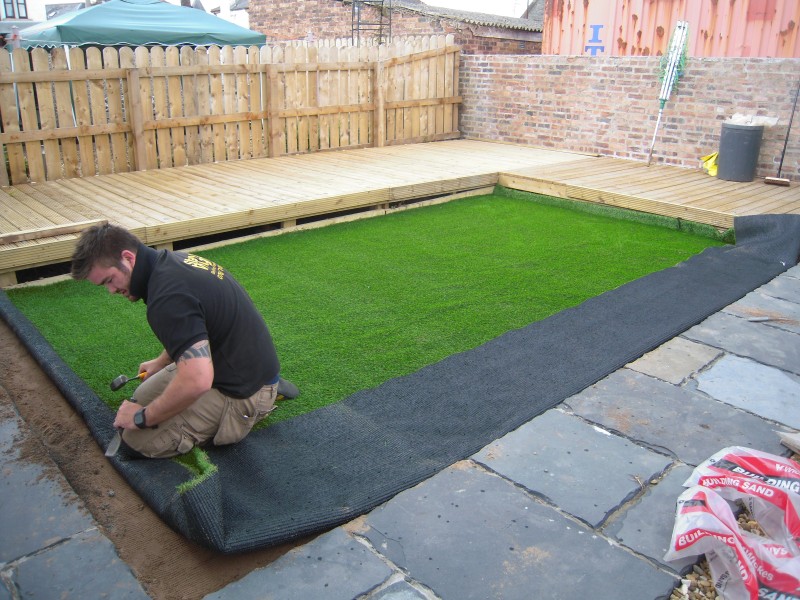
If you are doing it yourself, this is the kit, all of which I have used or would happily use:
- ANSIO heavy duty weed membrane, 2 m by 10 m
- Welstik self adhesive jointing tape, 15 cm by 10 m
- Half green galvanised U pins, pack of 50, half green so they disappear into the pile
- Kiln dried sand, 20 kg bag: one bag does four or five square metres
- Royale foam underlay, 15 square metre roll, for laying over a hard surface or under a play area
- Spear & Jackson stiff rake brush for brushing in the sand, and for the rest of the lawn’s life
A plate compactor is a hire shop job for a day, and you will want a sharp knife with plenty of spare blades. Full laying instructions come with most grass, and if you would rather leave the whole thing to us, we can supply and fit it in and around Dumfries.
Looking After Artificial Grass
Artificial grass is not quite maintenance free, but it is close. Brush it against the pile every few weeks to keep the blades standing, more often in the first fortnight after laying. Keep leaves off it in the autumn, because a mat of rotting leaves is where weeds get a foothold. Hose off anything a dog leaves behind, and for a lawn with a dog on it every day a proper artificial grass cleaner takes the smell away. I go through all of that, including stains, heat and worn patches, in how to maintain an artificial grass lawn.
Buying Artificial Grass, and Having it Laid
I hope this information has been useful in figuring out whether artificial turf might be suitable for your purposes. If you are still weighing it up against real turf, turf versus artificial grass sets the two side by side on cost and care.
If you are in Dumfries and Galloway, we will measure up, supply the grass and lay it, and we are happy to quote on a site by site basis. We lay real turf too, so if you are not sure which you want, ask, and you will get a straight answer rather than a sales pitch. Contact me here or through our local lawn care services page.
Happiness in four easy steps:
- Choose your artificial grass, from samples, in daylight.
- Measure up your garden and order the grass, allowing a bit extra for trimming and for the joins to run the same way.
- Install it yourself using the steps above, or ask me to have it installed.
- Get the barbie and wine out (on the slabs), and enjoy, courtesy of Lawns For You by Duncan Gray.
I hope you got what you needed out of that article, but if not, please do drop me a line. Either leave me a question in the comments box below this article, or email or phone me at Lawns for You using the Contact Me page. I am happy to advise on what would be best for your situation. Happy lawning!

I adore synthetic turf! It made me enjoy a green lawn all year long devoid of mowing, trimming or cutting. It additionally helped me save time, effort and money on maintenance. It’s an excellent option to real grass! Thanks for sharing such educational post! Keep posting. =)
That’s why I prefer artificial grass. We do not need to give extra attention as like original grass.
I love artificial grass too. No more grass stains on the kids clothes, the dog won’t traipse muck through the house any more and most of all, it looks real and requires minimal maintenance.
I’m also a grass man, but you can’t deny that sometimes it is easier and maybe better for your garden to install artificial grass.
Wow, I had no idea that artificial grass is both fire and stain resistant! That’s really nice, especially if you have kids and pets. I actually have two big dogs, and they always kill the grass when they do their business. It would be nice to not have to replace it frequently, and simply just wash off the artificial turf when there’s a mess!
Thanks so much for sharing this valuable information!
Artificial turf is a technologically advanced and environmentally friendly product out in market today.