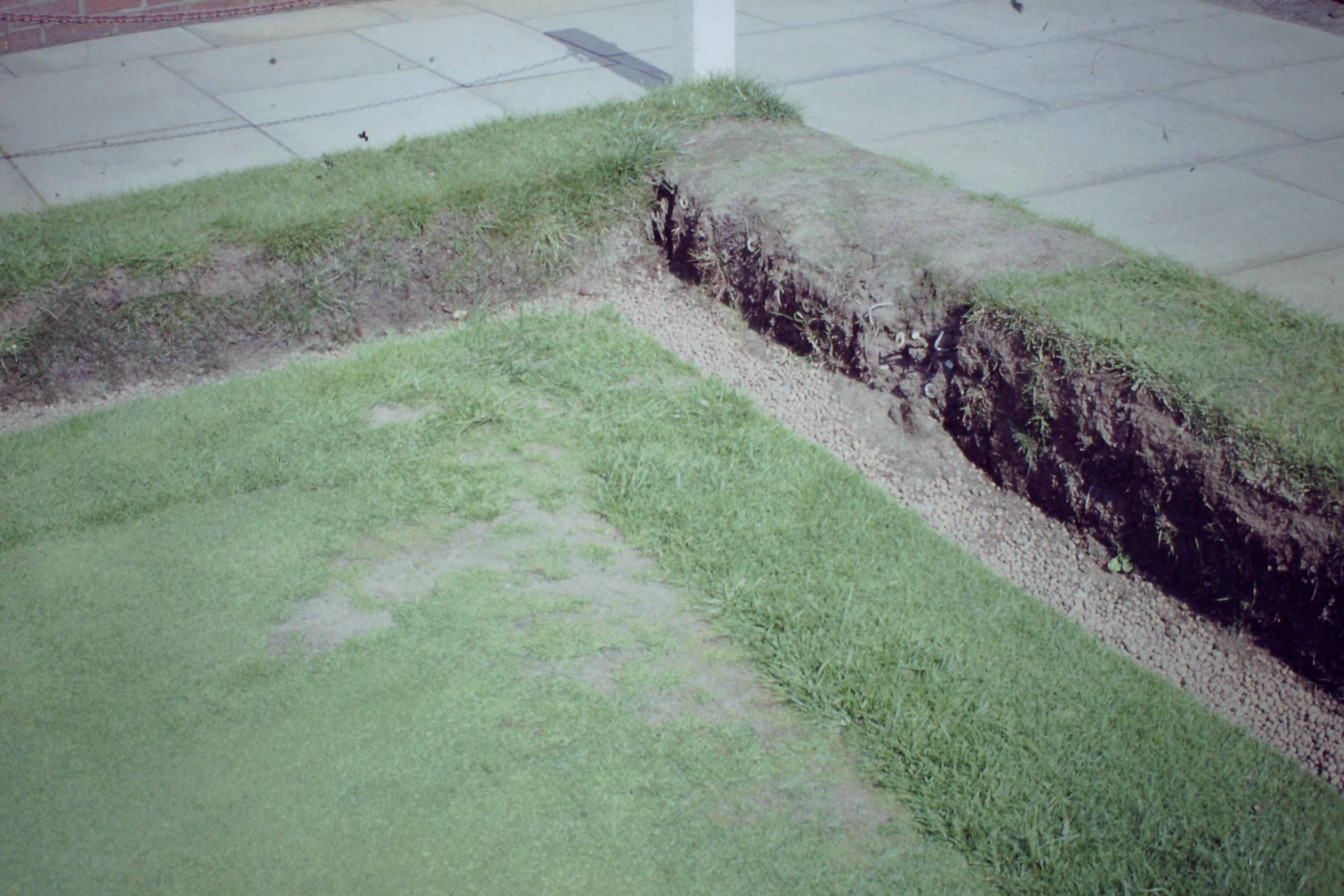
Bowling Green Maintenance in October: Finish the Renovation and Feed the New Grass
October is the recovery month. The green is closed, the renovation is either finished or about to be, and the whole of next season depends on what the new seed does in the next four weeks. There are two jobs that matter above everything else this month: getting the renovation done if it is not done already, and putting the autumn feed on at the right moment, which is later than most clubs think.
I am Duncan Gray. I spent my working life in greenkeeping, latterly in charge of nine bowling greens for Kyle and Carrick, including Ayr Northfield for the World Championships. This is October as I would run it on a club green.
Some of the links below go to our own shop. If you buy through them we may earn a small commission, at no extra cost to you. I only point you at products I use on a green myself.
Jump to a section:
- If the renovation is not done yet
- Watching for the seed to come through
- The autumn feed goes on when the seed is through, not before
- Mowing the new grass
- Start the winter slitting
- Leaves, worm casts, standing water and the first frosts
- Leatherjackets: the last window
- What goes wrong in October
- What the green should look like by the end of the month
If the renovation is not done yet
Many clubs close in the middle of September and are finished by now. Many others close at the end of September or the first week of October, and for them the first half of this month is the renovation. Either way the rule is the same: start the day the green closes, and the middle of October is the latest I would start anywhere in the UK. The earlier it is done, the more recovery you get. Everything that follows relies on the grass having growing time left to knit back together before the hard frosts, and every week you lose in October is a week of thin, open turf in April.
The steps, in the order they go, are written up in full in autumn bowling green maintenance and renovation, so I will not repeat them here beyond the order itself, because the order matters:
- Height of cut up to six to eight millimetres the day the green closes.
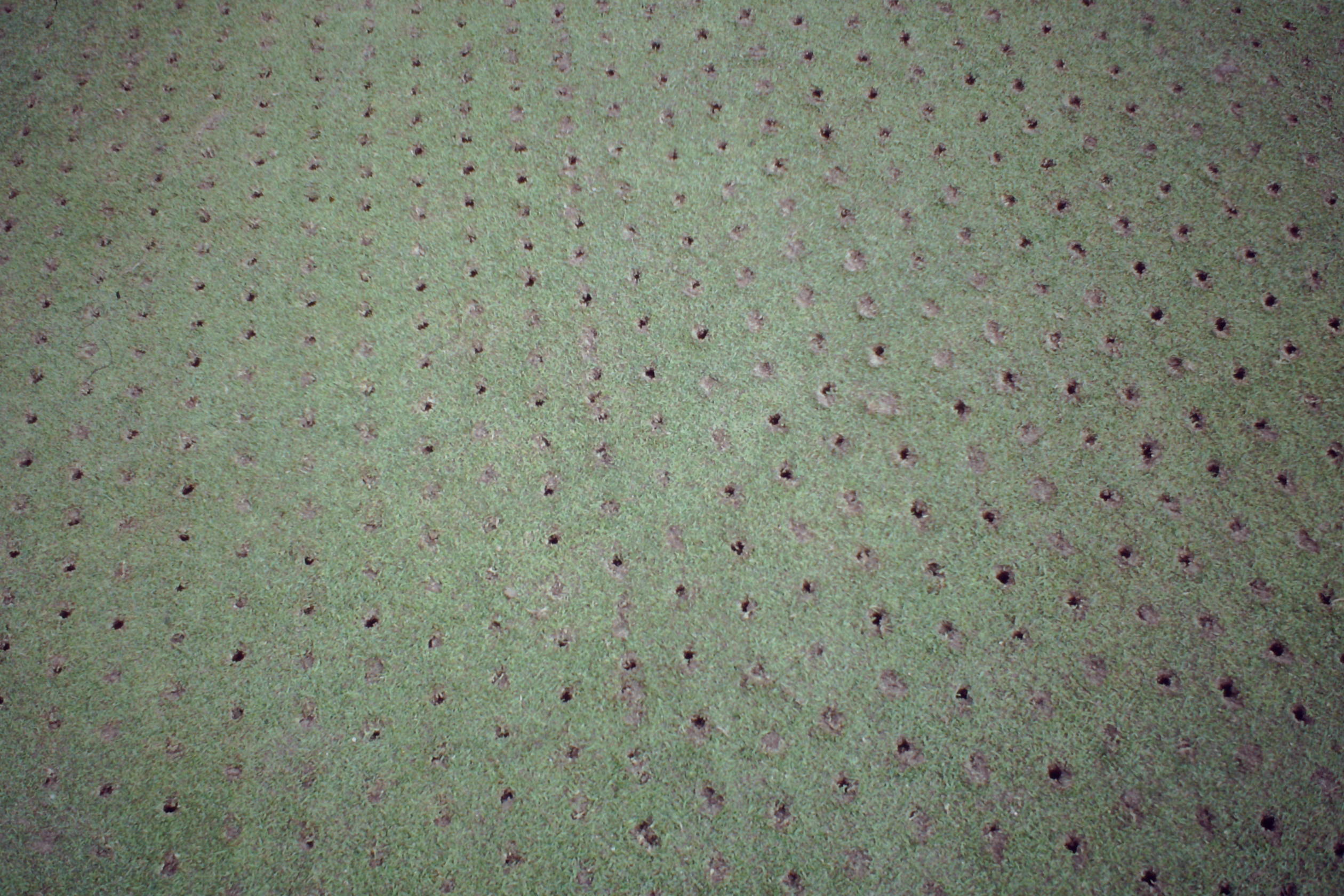
- Aerate: slit the whole green in one direction, hand fork the worn heads.
- Scarify, as hard as the thatch needs and no harder, and clear the debris off as you go.
- Overseed the heads and worn areas straight away while the surface is open, twenty-five grams per square metre of a fescue and bent mix, no ryegrass.
- Seaweed meal at fifty grams per square metre.
- Top dress with a tested medium-coarse sand, about two kilos per square metre, brushed in on a dry day until the surface is true.
Do not do the autumn feed on renovation day. That is the October job, and it comes next.
Watching for the seed to come through
Two to three weeks after seeding, the new grass comes through. On a head that was seeded in the third week of September that means the first or second week of October; on a green renovated in early October, the end of the month. You will see it first as a faint green haze in the fork holes and along the scarifier lines, then as fine needles standing up through the dressing.
That moment is the trigger for the next two jobs, the feed and the first cut, so walk the green every few days from the second week after seeding and look for it. If it is slow, do not panic and do not feed it to hurry it along. Seed germinates anywhere in the UK all year round in a mild spell, even in midwinter, and the cooler October gets the longer it takes. Patience costs nothing; an early feed costs you the seedlings.
The autumn feed goes on when the seed is through, not before
This is the one thing in October that most clubs get wrong, and I have changed my own articles this year to say it more plainly. The autumn fertiliser goes on once the new seed has germinated, usually two to three weeks after the renovation, so somewhere between the middle and the end of October.
The reason is simple. Put the feed on before the seedlings are up and it pushes the existing grass on, and the old sward grows over and smothers the new grass you have just paid for. Put it on as the seedlings emerge and you are feeding the old sward and the new grass together, which is what you want: the whole sward, new grass included, fills in and hardens off before the winter.
What goes on is a low nitrogen, no phosphate, high potassium feed, something like NPK 3.0.12, with magnesium, iron and seaweed in it. Three per cent nitrogen because you want only a little growth going into winter; no phosphate because the green does not need it; twelve per cent potassium, anywhere up to twenty is fine, because that is what hardens the grass against frost and disease. The magnesium, iron and seaweed are the extras, and the more of them in the bag the better. Granular feeds go on at about fifty grams per square metre, but always at the rate on the bag. Do not be tempted by a spring feed left in the shed: a flush of soft growth now is exactly what fusarium is waiting for. I explain what to look for on the bag, and which products I would choose, in the best fertilisers for autumn and winter.
Mowing the new grass
The other thing the seedlings trigger is the mower. Once the new grass is through, mow weekly at six to eight millimetres to the end of October, then as the weather allows over the winter. Six on a firm green with little thatch, eight on a soft old soil green that lies wet, because the height on the mower is a bench setting and a soft surface lets the machine sink in and cut lower than the number says.
Do not be frightened of cutting the new grass. It will come to no harm as long as the mower is sharp, which it should be at all times; a sharp blade cuts the seedling cleanly and it tillers, a blunt one pulls it out. Mow in at least four directions alternately. What you must not do is let the green get long because you are nervous of it. Long, soft grass going into November is a green with fusarium in it by Christmas, and a shaggy sward shades the seedlings you are trying to grow.
Start the winter slitting
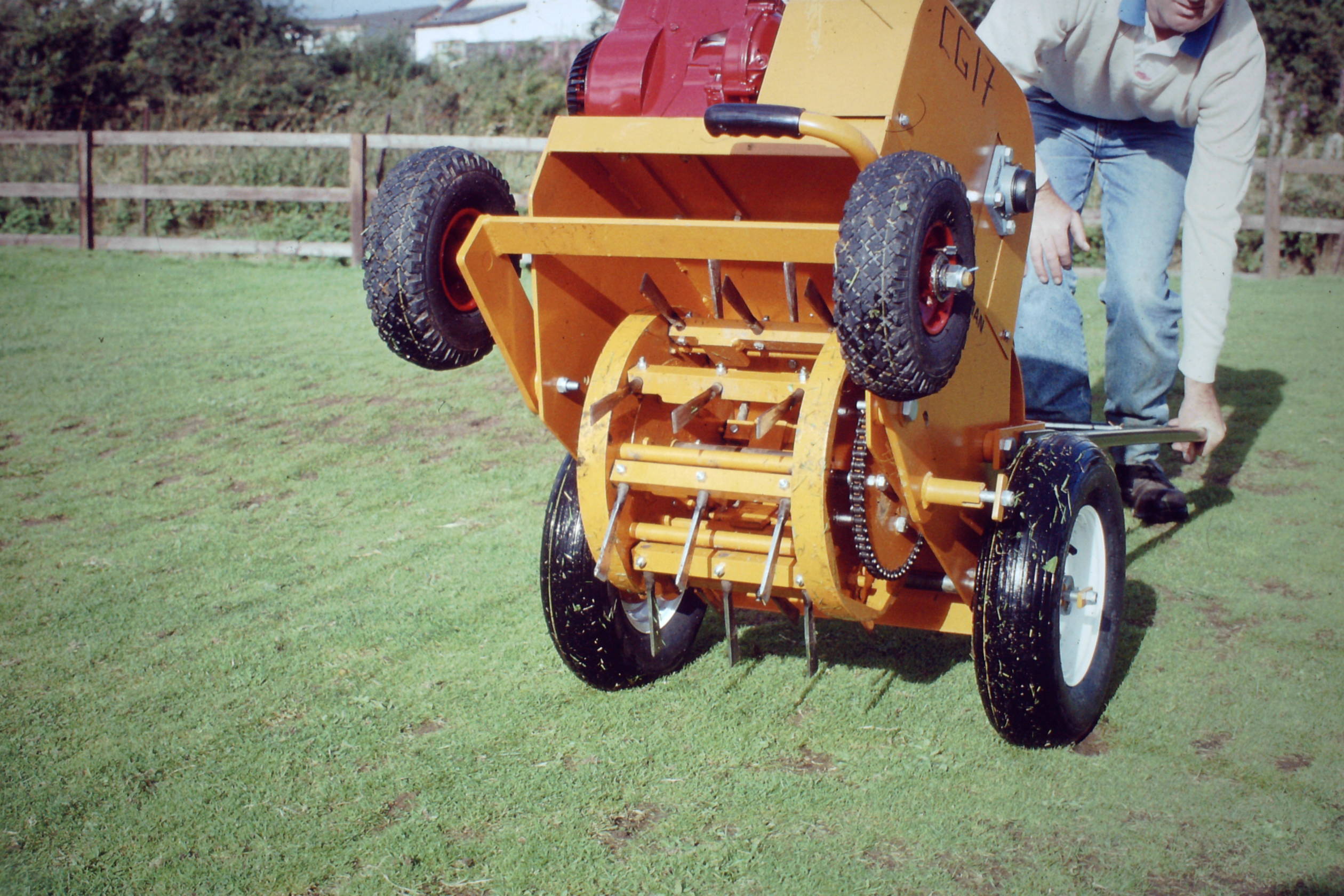
October is the first month of the winter aeration programme. Deep slit roughly once a month from now until March, always in the same direction, with chisel tines in between whenever the ground is neither frozen nor waterlogged. The renovation slitting counts as October’s pass if it was done this month; if the green was renovated in September, give it a pass with the chisel tines once the new grass is established and the dressing has settled, towards the end of the month.
A green that is slit all winter drains, roots and takes the summer far better than one that is not. The machines, and what each one does, are in aeration explained.
Leaves, worm casts, standing water and the first frosts
The leaves start coming down in earnest this month and they must not lie on the green. They block the light and hold moisture against the sward, and on a newly seeded green they smother the seedlings outright. Scoop them or blow them off every few days once they start.
Worm casts pick up in the damp weather. Switch them off at least once a week and always before mowing, or the mower smears them and you get a bare patch under every cast. Standing water after heavy rain gets pushed off, but note where it lies first: those are the low spots to raise with a little extra forking and dressing in February. Keep the ditches clear as the leaves fill them.
The first frosts are possible by the end of the month, more likely the further north you are, and the rule starts now: no work on the green while there is a white frost on it. Walking on it once the white has lifted does no harm, but wait for the frost to be out of the surface before you mow, fork or spray.
Leatherjackets: the last window
If leatherjackets are a known problem on your green, October is the last month you can do anything about them until next year. Nematodes are watered on in September and October while the soil is still above about twelve degrees, and they need moist soil and a bit of warmth to work, so early in the month is better than late. The one insecticide now approved for fine turf, Acelepryn, goes on in late October to early November, spiked in beforehand so it gets down to the grubs, and it is a professional product applied by a certificated contractor; one litre does up to eight applications on a green, so it is worth sharing with other clubs. The detail is in the definitive guide. Birds tearing at the turf over the coming weeks is the sign you missed them.
What goes wrong in October
Three things, in my experience, and they are all the same thing: impatience or its opposite.
- Feeding on renovation day. The feed goes on with the seaweed meal because it is in the shed and everyone is there. The old grass gets the benefit and the seed gets smothered. Wait for germination.
- Not starting. The green closes at the end of September, the committee meets in the second week of October, the contractor is booked for November, and the seed sits in cold ground doing nothing. Start the day it closes and have everything on site by mid-September so that you can.
- Leaving it long. Nobody wants to be the one who mowed the new grass and killed it, so nobody mows, and the green goes into the winter long, soft and diseased. A sharp mower at six to eight millimetres does the seedlings no harm at all.
What the green should look like by the end of the month
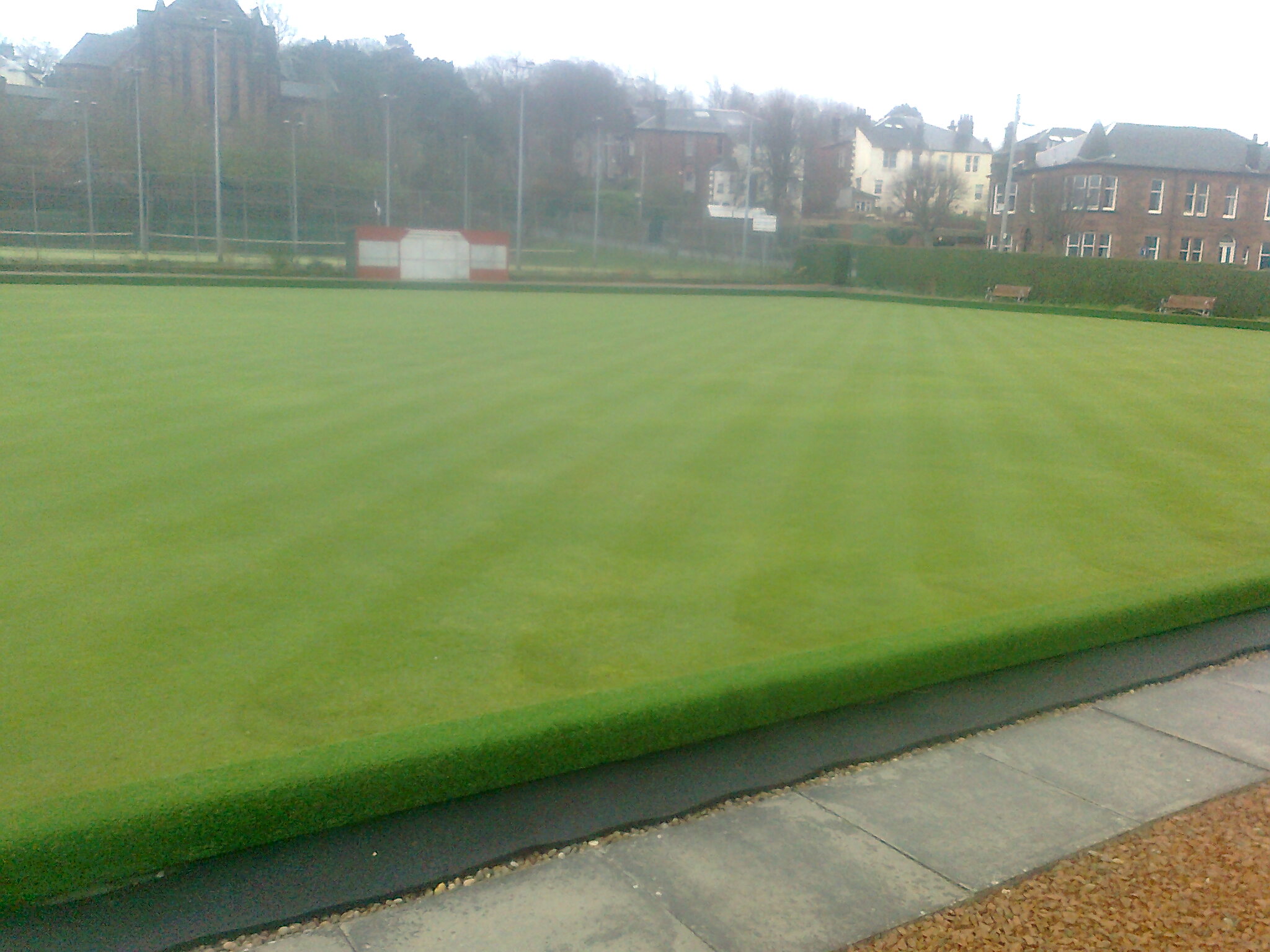
Pretty healthy. The full sward, the new grass included, growing well and looking fairly fresh, unless there have been very early frosts, which is unusual. The grass not allowed to get long. The dressing settled and the surface true. The feed on, the first slit done, the leaves off, and the winter programme under way, which is laid out in bowling green winter maintenance: November to February.
Your October checklist
- Renovation finished, or started by the middle of the month at the very latest.
- Walk the green every few days from the second week after seeding, looking for germination.
- Autumn feed, 3.0.12 type with magnesium, iron and seaweed, as soon as the seed is through. Not before.
- Mow weekly at six to eight millimetres once the new grass is up, with a sharp mower, four directions.
- First of the monthly winter slits, same direction every time.
- Leaves off every few days, casts switched weekly, standing water pushed off and noted, ditches clear.
- Nematodes early in the month, or Acelepryn by a contractor late in it, if leatherjackets are a problem.
- No work on the green with a white frost on it.
The whole year is laid out month by month in a full year’s maintenance of a bowling green, and you can print it and pin it up: The Bowling Green Year, my free bowling green maintenance calendar (PDF). The seed, the seaweed meal, the autumn feed and the winter iron are all part of the bowling green package I put together for clubs, and if you would like someone to walk the green with you before the winter sets in, that is what I do.
All the best,
Duncan.